
"This is not what I was expecting"
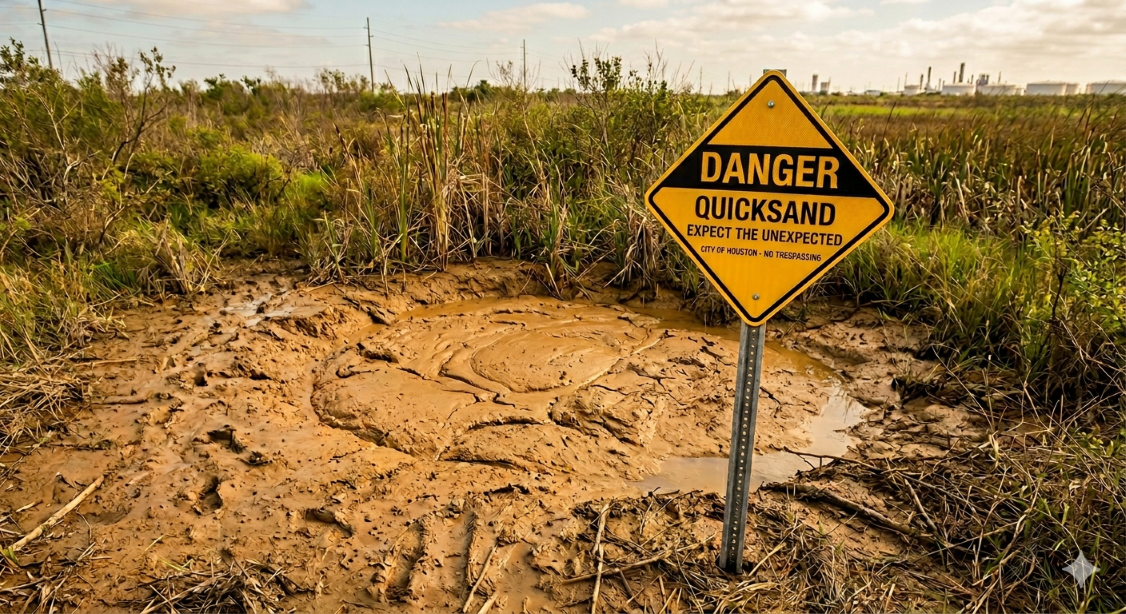
Growing up, I had a pretty wobbly understanding of what being an adult was going to be like. I mostly got it from cartoons and afterschool TV shows. According to all my childhood research, adulthood was going to be a constant stream of very specific emergencies. There was going to be a lot of quicksand. It was going to be everywhere, just out there waiting for me, like potholes scattered across the country. But it was cool, because I knew what to do: stay calm, lean back, don’t struggle, and grab the nearest vine—there will always be a vine.
I knew at some point I’d have to deal with amnesia, wake up somewhere and not know who I am—all the hijinks that goes with that particular problem. I still carry a laminated card in my wallet with my name and address on it, just in case. I’ll bet you do, too. Ha. I was ready for people to faint dramatically when they heard bad news—always be ready to catch them—don’t let them hit the floor, that would just be more bad news when they woke up… probably not remembering who they were. And, of course, I knew the day would come when I’d have to choose between cutting two wires—one of them would save the day but the other would blow up the world. That’s why I didn’t want to grow up, it’s a lot of pressure for a kid.
But then you eventually realize none of that happens—sometime in your late 20s. There’s no quicksand, no dramatic fainting, no neatly resolved problems in 22 minutes with background music and a laugh track telling you how to feel. Life is slower, messier, more complicated, and a lot more confusing than what we were expecting.
That feeling—the gap between what we thought was going to happen and what actually happens—isn’t just something we experience in life. It’s at the heart of Palm Sunday. The day when we celebrate Jesus riding into Jerusalem to the crowds shouting, “Hosanna,” which means “Save us now” echoing Psalm 118:24–26, “This is the day that the LORD has made; let us rejoice and be glad in it. Save us, we pray, O LORD! (in Hebrew “Hoshia na”) O LORD, we pray, give us success! Blessed is he who comes in the name of the LORD! We bless you from the house of the LORD.” Palm Sunday is a multitude of Jewish people worshiping God and giving thanks for the arrival of the Messiah. They’re excited. It’s loaded with expectations. Everyone there believes they know exactly what is about to happen… and every single one of them is wrong.
This is not going to be what they were expecting.
To understand why, we have to understand what the people of Jesus’ day believed. When Jesus showed up the first time it was the period often called Second Temple Judaism. The first temple had been destroyed by the Babylonians in the exile. The current temple had been started when the exiles returned at the time of Ezra, about 500 years prior, but it wasn’t as nice as Solomon’s temple—Herod had been giving it a facelift for about fifty years, it was always under construction, kind of like the Grand Parkway—it functions but it’s an ugly reminder that nothing is as it should be. The general theology of the Jews at this time believed history was moving toward a decisive, God-ordained conclusion. They saw themselves as living in the final act of God’s plan. Even though Israel had returned from exile in Babylon, many believed they were still spiritually and nationally in exile. Rome was ruling over them with a heavy hand, and the presence and glory of God had not returned to the temple. The expectation was that when God truly returned, everything would change. Those who had kept the law of the Torah would be vindicated and the wicked would be destroyed. They were looking for God to provide a geo-political solution to all their problems.
The amazing thing is God had already returned—just not in the way they expected. Thirty-three years before the Palm Sunday parade, about forty days after Jesus was born, when His mom and stepdad brought Him to the temple. The conquering king showed up as a helpless infant, his parents brought the sacrificial offering of the poorest of the poor—two doves, a concession for those who couldn’t afford a lamb (Leviticus 12:6–8). The Lord returned to His temple but almost no one noticed. Only two people—Simeon and Anna—they’re the only ones who recognized what was happening. Simeon took baby Jesus in his arms and declared he could now die in peace, now that he had seen God’s salvation (Luke 2:29–32), and Anna spoke up and prophesied about the child to all who were waiting for redemption of Jerusalem (Luke 2:36–38). But everyone else missed it… they were waiting for God to return to the temple in power and glory, meanwhile, God was carried in as a baby, in His mother’s arms. They were waiting for God to show up… and He already had. They just didn’t recognize Him.
Now, here He comes again, this time on a donkey, surrounded by people shouting and singing.
It’s a big crowd. Some of them are there because they’ve heard this Jesus guy actually walks on water! That He’s the One they’ve been waiting on. Some are there because they heard He raised a man from the dead at a funeral with a bunch of people watching. A bunch of them are there because they want to see the guy that came back from the grave.
And the disciples are right in the middle of it— just as caught up in the expectations as everyone else. They’ve been following Jesus for three years. They’ve seen Him raise the dead more than once, they’ve seen Him control the weather, cast out demons, and teach constantly about the kingdom of God that is here and also yet to come. So they’re thinking, “Here we go… this is it.”
“This is it, right?” They’re a little conflicted. Like a couple days earlier when Jesus says they’re heading to Jerusalem and Thomas says,
“Great! Let’s all go, so we can die with him” John 11:16.
Not exactly confidence—more like resignation. He’s expecting danger, not victory. But most of them are still thinking in terms of power and position. Like when James and John come to Jesus and say,
“Grant us to sit, one at your right hand and one at your left, in your glory” Mark 10:37.
They’re not imagining a cross—they’re assuming a throne, lobbying for cabinet positions. Even at the Last Supper, later this week, Luke says
“a dispute arose among them, as to which of them was to be regarded as the greatest” Luke 22:24.
They’re pretty locked in to their expectations.
So when Jesus rides into Jerusalem and the crowds are shouting and the energy is building, the disciples are right there in the frenzy. This feels like confirmation. This feels like everything they’ve been hoping for. But in a few days, that confidence is going to completely unravel. When Jesus is arrested, they scatter (Mark 14:50). When He’s on the cross, they’re hiding. And after the resurrection, when a couple of them are running away to Emmaus, they run into the risen Jesus, who doesn’t let them recognize Him at first, and we hear what they really thought all along:
“We had hoped that he was the one to redeem Israel” Luke 24:21.
Not forgive sins. Not die and rise. Redeem Israel and make it great again. In other words, “We thought we knew what He was doing… clearly we were wrong about Him.” That’s a hard sentence. “We had hoped… that hope is dead.”
So, back on Palm Sunday, the people think they know exactly what’s about to happen. He’s the Messiah. He’s going to act as a king in the line of David, a warrior, a human ruler anointed by God who’s going to knock down Israel’s enemies and restore national independance—
”Break them with a rod of iron and dash them in pieces like a potter’s vessel”
like it says in Psalm 2:9.
They expect the temple to be restored and purified, with true worship (Malachi 3:1–3).
We know about Jesus and what actually happened but most of them were expecting more than one Messiah—a king, a separate priest, and a prophet—some combination of two or three Messiahs who together would bring about God’s final plan (Deuteronomy 18:15; Zechariah 6:12–13). But, surprise, it’s just one Messiah. The prophet, priest and King named Jesus.
That’s a lot of expectation put on a guy riding a donkey with a random assortment of fishermen and nobodies, making a bunch of noise and riding straight toward a cross. The idea that they had been waiting on a Messiah Savior who was just going to show up to be killed by the Roman bullies was not on their radar.
I mean, they expected suffering… But in their minds, the people would suffer and then the Messiah would win the day. The idea that the Messiah Himself would be the one to suffer and that His suffering would be the very means of victory—that wasn’t something they could get their head around, even though passages like Isaiah 53 and Psalm 22 painted a pretty gruesome picture.
They were definitely thinking of Zechariah 9:9 though…
“Rejoice greatly, O daughter of Zion! Shout aloud, O daughter of Jerusalem! Behold, your king is coming to you; righteous and having salvation is he, humble and mounted on a donkey, on a colt, the foal of a donkey.”
So when Jesus rides into Jerusalem on a donkey, fulfilling prophecy, the crowds see it all through that framework. They see the palm branches, they shout “Hosanna,” and they believe this is the moment when it’s all going down… Rome will be overthrown, and everything will finally be made right. Palm branches were a patriotic symbol of Jewish nationalism. They think this is a military parade as much as a worship service.
But it’s not going to be what they were expecting… Instead of retaking the throne of David, Jesus weeps over the city (Luke 19:41–44). Instead of making strategic war plans, He talks about His coming death (John 12:23–24). Instead of marching to face Rome with power, He walks toward a cross to die.
They weren’t wrong about the Messiah coming.
But they were very wrong about what He came to do.
I wonder the same thing about us sometimes. We're not wrong about Jesus the Messiah, the Christ. But what are we expecting from Him?
When we show up here. When we worship. When we pray. When we come to Jesus with our expectations. I think we kind of do the same thing. We want Him to fix our problems, to align His will with our plans, to remove our suffering—make everything make sense according to our timeline.
We think, “If I follow Jesus, things should get better. Easier.” We think obedience is going to smooth things out, not complicate anything. We think God is going to remove whatever’s bothering us—the stress, the conflict, the struggle, the sickness—because that would make the most sense to us. The medical test should show good results. The job should come through. I mean, I go to church, I pay my tithe, so God should answer my prayer and do what I want.
And when He doesn’t, we don’t know what to think, “this isn’t what I was expecting.” We get frustrated, we doubt, wallow in disappointment—because we’re trying to fit Jesus into our understanding of how we think things should go.
And not just in our personal lives. Our theology tends to be pretty jacked up, too. The modern church does this on a massive scale when it comes to the return of Jesus. We talk about the second coming as if we have it all mapped out—rapture, tribulation, antichrist, mark of the beast, rebuilt temple—charts, timelines, predictions. Keep your eyes on Palestine. People have tried again and again to pinpoint when it’s going to happen, even though Jesus Himself said,
“Concerning that day and hour no one knows” Matthew 24:36,
and specifically told us not to try and figure it out (Acts 1:7). But people do it anyway, and get so confident in their little “end times” speculations that we forget the lesson of Palm Sunday: they were so confident—and so completely wrong. Here’s what we know: Jesus is going to return, but we should be humble enough to admit that we probably don’t understand exactly how it’s going to happen any better than they did.
That’s okay. That shouldn’t be a problem. Our trust is in the Lord, not our ability to try and understand all His mysteries.
This is good news for all of us who are tired of people arguing about how their theological opinions can beat up your theological opinions.
Jesus came riding into town on a donkey doing exactly what needed to be done, even though no one expected it to happen the way it did. The crowds wanted political freedom, but Jesus came to bring forgiveness of sins (Matthew 1:21). They wanted Rome gone, Jesus didn’t just come to deal with Rome, He was doing something a lot bigger. They wanted immediate relief from all their troubles, but He was aiming higher—the source of all those troubles—He came to defeat sin, death, and the devil once and for all. Hebrews 2:14 says,
“Because God’s children are human beings—made of flesh and blood—the Son also became flesh and blood. For only as a human being could he die, and only by dying could he break the power of the devil, who had the power of death. Only in this way could he set free all who have lived their lives as slaves to the fear of dying.”
They wanted a king who would destroy their oppressors, but He came as a king who would give His life for all of God’s enemies (Mark 10:45). The cross, which looked like complete failure, was always the plan from the beginning. Acts 2:23 says,
“But God knew what would happen, and his prearranged plan was carried out when Jesus was betrayed. With the help of lawless Gentiles, you nailed him to a cross and killed him. But God released him from the horrors of death and raised him back to life, for death could not keep him in its grip.”
He didn’t fail their expectations—His plan was just so much bigger than they saw coming.
Palm Sunday was the moment when everyone thought they understood what God was doing, but they were completely wrong—and thank God they were. Because if Jesus had done what they expected, He wouldn’t have gone to the cross. And if He wouldn’t have gone to the cross, we would still be dead in our sin and headed straight for hell. Thank God, He had other plans for us.
So, here we are. Palm Sunday 2026. Sitting in church. Trying to imagine what a guy riding into Jerusalem on a donkey has to do with all our troubles and pain and sadness and frustrations and politics and news and all the other ways that life didn’t turn out the way we expected.
Quicksand and amnesia would have been a lot easier.
When following Jesus isn’t what you expected it to be, when life doesn’t unfold the way you think it should, when God’s timing and ways of doing things feel confusing—Palm Sunday invites you to trust Him anyway. Just because it’s not what you expected doesn’t mean it’s not exactly what God is doing. The life God gave you is going to be wonderful and mysterious. Expect it to not be what you were expecting. AMEN
Prayer Father in heaven, We come to You with open hands, admitting that we don’t always understand what You are doing. So often we expect one thing, and You are doing something deeper, something better. Forgive us for the times we’ve tried to fit You into our plans instead of trusting Yours.
Teach us to follow You, even when the path leads through confusion, suffering, or things we didn’t expect. Give us faith to trust that You are at work, even when we can’t see it clearly.
Thank You for going to the cross—for doing what we never would have asked for, but exactly what we needed. Strengthen our trust in You, and help us rest in Your grace.
In Jesus’ we pray,
Amen.