
For When You're Tired of Church (2nd and 3rd Commandment)
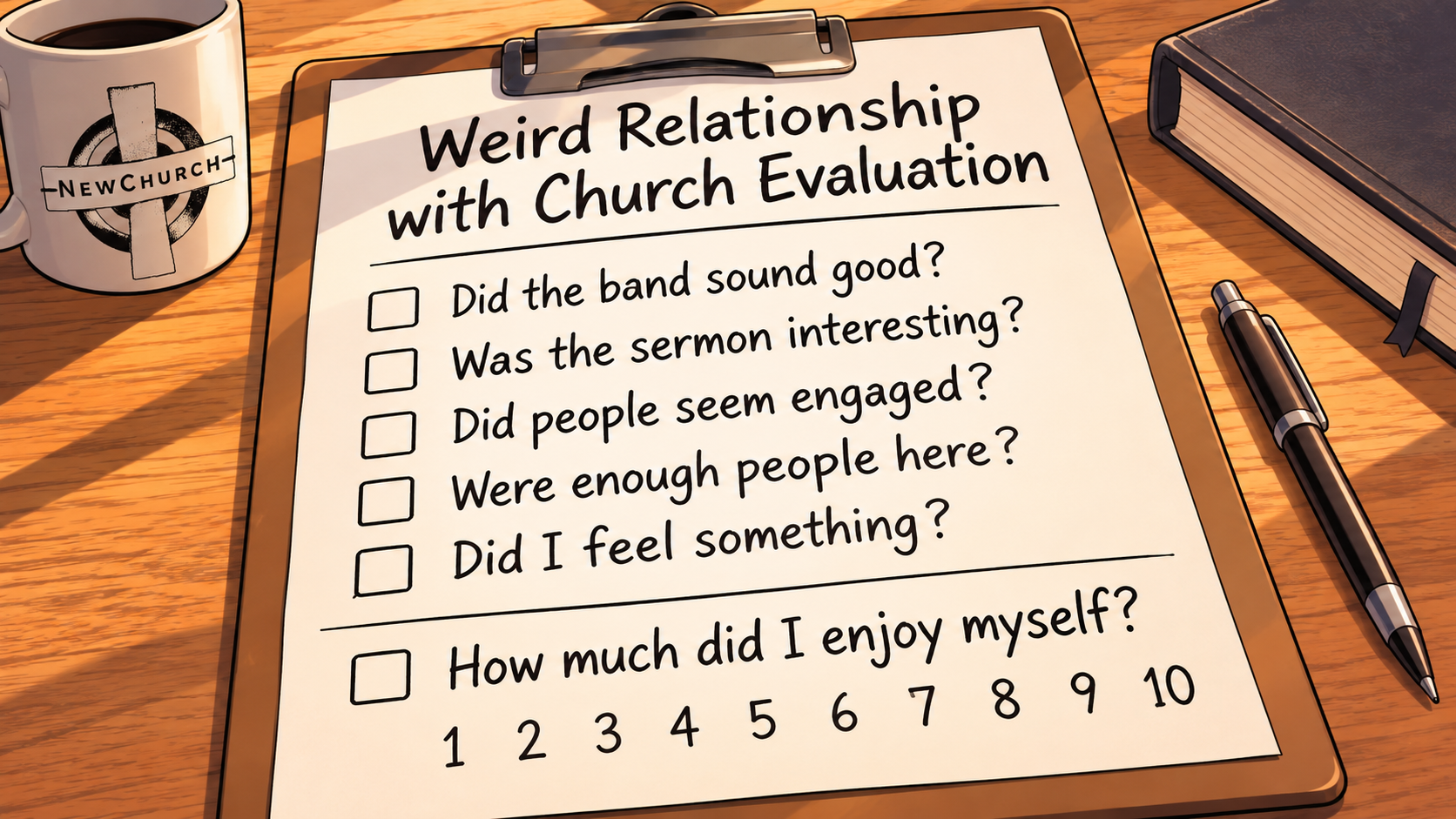
I used to think I had the Second and Third Commandments all figured out. “Don’t take God’s name in vain” means "don't cuss," and “Remember the sabbath” means "go to church." Two more boxes checked on the good Christian checklist. But the Bible has this annoying habit of showing us that we've barely scratched the surface.
A lot of us have a weird relationship with church. We know we’re here to worship but we also expect to get something out of it. So we evaluate everything. Did the band sound good? Was the sermon interesting? Did people seem engaged? Measure worship by how much we enjoyed it or whether we felt something. Were enough people here? We can start thinking we’re doing God a favor by showing up. As though the Creator of the universe is sitting in heaven saying, "Wow, Frank went to church again! What a guy! Thank Me!"
Maybe some of us get tired of church because we've turned it into one more thing we're supposed to do. One more obligation. One more place where we have to perform, participate, and prove ourselves.
And maybe we’re tired of church because church people hurt us, or because we’ve been carrying more than we can keep carrying. Not every kind of tired is the same. But whatever has worn you out, you don’t need one more burden of trying to prove yourself to God.
We're continuing our series through Luther's Small Catechism—the basic building blocks of the Christian faith. He wrote it because he discovered that people could spend their entire lives going to church and still not know what they believed. Sound familiar? He wanted something simple enough for parents to teach their children at home. Not a new version of Christianity, just the basics of what God actually says in His Word.
Today we're looking at the Second and Third Commandments. After God rescued Israel from slavery in Egypt, He told them how to live in their newfound freedom. God rescued them first. Then He gave them the commandments. Here's the Second Commandment…
Exodus 20:7 says,
"You shall not take the name of the LORD your God in vain, for the LORD will not hold him guiltless who takes his name in vain."
What does this mean? Let's read the explanation together. It's on the screen.
"We should fear and love God so that we do not curse, swear, use satanic arts, lie, or deceive by His name, but call upon it in every trouble, pray, praise, and give thanks."
Notice how much more this covers than bad words. We misuse God’s name when we use it to deceive people, manipulate, or make our own words sound like they have God’s authority behind them. Saying, “I swear to God” doesn’t make a half-truth true. Also… “Satanic arts!” Geez, Luther!
“Don’t take God’s name in vain.” We usually think this means watching what we say when we stub our toe. Which, fair enough. But it’s a lot more than that. And for those of us baptized in the name of the Father, Son, and Holy Spirit, this is personal. His name was placed on us. We’re in His family now. We carry His name into the world. We represent Him.
So this commandment covers all the ways we dishonor His name when we claim to be Christians while living contrary to His Word. By the way we act, including how we speak. Even in traffic. Or while playing video games!
When our kids were little, we encouraged them to say “Darn it!” or “Geez!” when they were tempted to say something else. I know some people don’t think those substitutes are any better. I get it. We weren’t trying to make a list of approved Christian cuss words. I think deliberately not using God’s name flippantly is honoring Him.
But this goes way beyond what we say when we’re frustrated. Like when we're talking about the Bible or talking about what God promises or demands of us, we need to separate His Word from our opinions. It’s fine to say, "Here's what I think it means," but we shouldn't claim God said something He didn't. Don’t make up rules He didn’t actually give us. Don’t act like God has promised something He hasn’t promised. Don’t put words in God’s mouth.
We also misuse His name when we treat prayer like a magic trick. Saying "in Jesus' name" doesn't force God to give us whatever we want. Jesus isn't a genie. Praying in Jesus' name is good, it means approaching the Father through Christ—which is the only way we have access to Him. But it isn't the Christian version of "abracadabra."
In the Lord's Prayer, Jesus teaches us to pray, "Hallowed be Thy name." Of course God's name is already holy. We’re praying that we’ll keep His name holy.
But God doesn’t just tell us how not to use His name. He invites us to use it—to call on Him when we’re in trouble, pray, praise, and give thanks. He gives us His name to call on. And He gives us His Word to hear. Which brings us to the Third Commandment.
Exodus 20:8–11 says,
"Remember the Sabbath day, to keep it holy. Six days you shall labor, and do all your work, but the seventh day is a Sabbath to the LORD your God. On it you shall not do any work, you, or your son, or your daughter, your male servant, or your female servant, or your livestock, or the sojourner who is within your gates. For in six days the LORD made heaven and earth, the sea, and all that is in them, and rested on the seventh day. Therefore the LORD blessed the Sabbath day and made it holy."
What does this mean? Let's read the explanation of the Third Commandment together…
“We should fear and love God so that we do not despise preaching and His Word, but hold it sacred and gladly hear and learn it."
So the heart of the Third Commandment isn't just taking a day off. It's hearing and learning God's Word—gladly. In other words, worship.
For Israel, the Sabbath was supposed to be a gift of freedom. Everybody was to rest, including servants and animals. They were former slaves. Slaves don't get weekends off. And in Exodus 31, God calls the Sabbath a sign "that you may know that I, the LORD, sanctify you." Sanctify means to make holy. Notice who's doing that. God is.
Which is why Jesus says in Mark 2:27 says,
"The Sabbath was made for man, not man for the Sabbath."
The religious leaders had turned God's gift of rest into a bunch of rules about how to rest and how not to rest that were exhausting and confusing. Which takes a special kind of talent to turn rest into more work. They complained when Jesus' disciples picked some heads of grain to snack on because they were hungry, and they lost their minds when Jesus healed people on the Sabbath. But Jesus showed them the Sabbath was made for our good, not to make life hard.
Because holy rest is more than doing nothing. And when I say you can find rest in church, I’m not talking about taking a nap during the sermon.
Also, we need to be clear about something: Christians aren't obligated to the Old Testament laws of doing no work on Saturdays. It’s not about that for us. And instead of the seventh day, the early church started gathering for worship on Sunday because Jesus rose from the dead on the first day of the week. Doesn’t mean we have to worship on Sunday but it is an acceptable practice established in Scripture. But just taking a day off doesn't make it holy. The kind of rest God is talking about gives us time to hear His Word, think about it, pray together, give thanks, and encourage each other. It’s about receiving what God has for us.
That's why Lutherans call worship the Divine Service. This is where the divine serves us—God serves us. Through His Word, absolution, Baptism, Communion, He gives us His gifts. We're not the ones doing God a favor by showing up on Sunday.
But it’s not just about Sunday—God's Word isn't just for one day. We need Scripture, prayer, and conversations about God every day if we’re really going to follow Jesus and actually be His disciples—We don’t outgrow our need for God’s word.
Also, the Second Commandment deals with promises we make in God's name. It isn't saying we can never take an oath. There's nothing wrong with swearing to tell the truth, the whole truth, and nothing but the truth so help you God, in court. The problem is making solemn promises we have no intention of keeping. When we make promises before God in His name, our word ought to mean something.
Which is why these two commandments are directly related to what we do in church—like the promises we’ve made when we witness baptisms and weddings and church membership vows—all those times we’ve promised before God to be faithful in our worship and support each other in their faith. Which includes faithfully attending weekly worship and midweek Bible studies. Because our absence affects other people—not just the leaders. Not many things are more discouraging than church services or discipleship groups when half the people don't show up.
I'm not talking about when we’re sick, or occasionally have to work, are out of town, or dealing with something that keeps us from being there. Life happens. But we all know how easy it is for other things to keep us away. How easy it is to make excuses. And the devil loves that. He didn't want you here today. He wants us isolated from God's Word, cut off from the encouragement of other Christians, and eventually convinced we don't need church at all. You feeling any of this?
Your presence matters—not because God is keeping an attendance record, and not because the church needs you to keep a chair warm. You have brothers and sisters here who need encouragement, just like you do. Sometimes you might show up barely able to sing, but the congregation sings around you. Sometimes someone else can barely pray, but you pray beside them, with them. We gather here to receive what God has for us and to encourage each other however we can.
Paul brings these two commandments together in Romans chapter ten.
Romans 10:13 says,
"For everyone who calls on the name of the Lord will be saved."
There's that Second Commandment. Call upon the name of the Lord. Trust in His name. Believe in His name.
Then he asks how people can call on the Lord if they don’t believe in Him, and how they can believe without hearing His message.
Romans 10:17 says,
"So faith comes from hearing, and hearing through the word of Christ."
There's the Third Commandment! God gives us His name to call upon and His Word to hear and believe. We have to show up for this to happen! This is where we’ll find holiness and rest.
Because speaking and hearing His Word actually does something.
In 1st Thessalonians 2:13, Paul calls it
"the word of God, which is at work in you believers."
The Holy Spirit works through the word of Christ, the Gospel, to create and strengthen faith. It's not just religious information or an inspirational message.
Faith isn’t something we drum up. Faith is a gift that God gives us through His word. That’s why our church service is completely built around God’s word. But we’re tempted to treat worship like just another thing competing for our attention and approval.
We want it to be an extraordinary experience, with some miraculous signs, something that proves God's really there. But what He’s promised is this… He's given us His Word, His forgiveness, His body and blood.
We’re in His presence, with His people, His word is in our mouth through the songs, in our ears through the reading, His name is written on our heart in our baptism, received by faith. We have His name, but do we take it in vain? Are we keeping it holy?
It goes back to the First Commandment all over again. We don't fear, love, and trust God above all things. We think too little of the name God has given us.
Or worse—we turn His gifts into our accomplishments. We’re proud of our attendance record, of our Bible knowledge, compare how spiritual we are to other people, or think our emotional religious experiences make us closer to God. Spiritual pride is not pretty.
We need to be careful with our relationship to God's commandments. It's easy to fall into legalism. The commandments show us how God wants us to live, but they can't make us holy. We can't make ourselves holy by saying the right words, avoiding the wrong ones, attending church, or having the right spiritual experiences. We need a Savior.
We find our rest in what Jesus has already done for us.
Jesus perfectly honored His Father's name. He kept all His promises, kept the Sabbath, delighted in the Scriptures—He obeyed every one of the commandments. Then He went to the cross carrying the guilt of every promise we've broken, every time we've dishonored God's name, and every time we've despised His Word. He took the judgment we deserved. The wages of all our sin was put on Him and He died for us. And when He rose from the dead, He defeated sin, death and hell for all of us.
His righteousness is yours through faith. You don't have to earn it.
This is what God told Israel about the Sabbath: "I, the LORD, sanctify you." God's the One who sanctifies His people—He makes us holy. And that's what He's done for you through Jesus. He's forgiven your sins, reconciled you to the Father, and made you His beloved child.
In Matthew 11, Jesus says,
"Come to me, all who labor and are heavy laden, and I will give you rest."
He's offering more than a day off. He's offering rest from the impossible burden of trying to make yourself right with God. Rest from wondering whether you've done enough, believed hard enough, or been good enough.
Hebrews four describes the rest that’s promised for God's people. Right now, through faith in Christ, you already have peace with God. But there's an even greater rest that’s coming. One day you'll be free from sin, free from suffering, and free from the threat of death forever.
This is the rest you’ve been promised, and you don’t have to work for it. Jesus finished it all on the cross.
And we show up here so God can give you His gifts. Are you baptized? In Baptism, God puts His name on you. If you’re not baptized, come talk to me. Are you listening? To the sermon, the readings, the lyrics of the songs. Because through the preaching and hearing of His Word and proclaiming of absolution, He announces your forgiveness—gives it to you fresh every week. In Communion, He gives you His body and blood for the forgiveness of your sins.
These gifts are for you, and none of them depend on whether you feel them or not. They're real and true because Jesus said so. Your forgiveness doesn't depend on your emotions. Neither does God's presence. The same Jesus who died and rose for you is the One who makes these promises to you right now.
This is where we find our rest in Him. He is our sabbath.
So God's commandments aren't a bunch of religious rules to make us miserable. They're wisdom for living as free people in Christ. They’re a description of the good life He saved us to live.
People who live the way God tells us to live make better husbands, wives, parents, neighbors, coworkers, and friends. We carry the Lord’s name into every one of those relationships.
Here's something to try this week. When you're frustrated, worried, or afraid, instead of using God's name as an exclamation (or right after you have!), use it as a prayer. "Lord, forgive me… help me." "Father, have mercy." That's what He gave us His name for.
And if you've got kids or grandkids, talk about these things at home. Ask them what it means to carry God's name. Ask what church is for. Maybe read these two commandments and the explanation together at dinner. You don't need to turn the dining room into a seminary. Just make God's Word part of the conversation.
And do what you can to make sure those kids and grandkids are in church.
It’s wise to make weekly worship and discipleship a priority. This is the main place we hear the Gospel, and we need to hear it constantly because we forget it constantly. It’s food for our soul. We don't skip eating dinner because we had dinner last week. Like it says in Hebrews 10:23,
“Let us hold tightly without wavering to the hope we affirm, for God can be trusted to keep his promise. Let us think of ways to motivate one another to acts of love and good works. And let us not neglect our meeting together, as some people do, but encourage one another, especially now that the day of his return is drawing near.”
All that to say, commandment two and three: don’t cuss and also, go to church. Sure. They mean that but I hope we see they mean a whole lot more.
So in a few minutes we’ll get in our cars and drive away. Maybe thinking, “What did I get out of church today? What’d I think of the music? Did I learn anything? Did I feel anything?” It’s good to learn and it’s good to feel but those are kind of the wrong questions.
Because here's what happened: God’s word was spoken. Jesus’ forgiveness was announced. He gave what He promised He would give. Whether we felt it or not.
And if you’re tired of church, whatever has made you weary, maybe it's because you've been carrying a burden Jesus never asked you to carry. You don’t have to impress God. You don’t have to manufacture a spiritual experience. You don’t have to prove you’re a good enough Christian. You come with your sins, your distractions, your doubts, and your weariness. And Jesus gives you what you can’t give yourself.
He’s already done everything necessary to save you. He brings you here to receive His gifts, not to earn them. You don't have to work your way into God's presence.
And He has promised you rest. There will come a day when you will absolutely know for sure that you haven’t taken the Lord’s name in vain—not because you always honored Him or kept the commandment, but because He will honor the promise He made in your baptism. He put His name on you to make you part of His family. His name was never given to you in vain. And on that day He’ll look at you and say, “Well done my child, enter into your promised rest.” AMEN
Prayer
Father in heaven, thank You for putting Your name on us and making us Your own. Thank You for giving us Your Word, forgiving our sins, and giving us rest in Jesus. When we’re weary, remind us that we don’t have to prove ourselves to You. Help us gladly hear Your Word, call on Your name, and encourage one another. Thank You that Your promises are true, whether we feel them or not. In Jesus’ name, Amen.