
Acts 28 "For When You Don't Know How Things Will Turn Out"
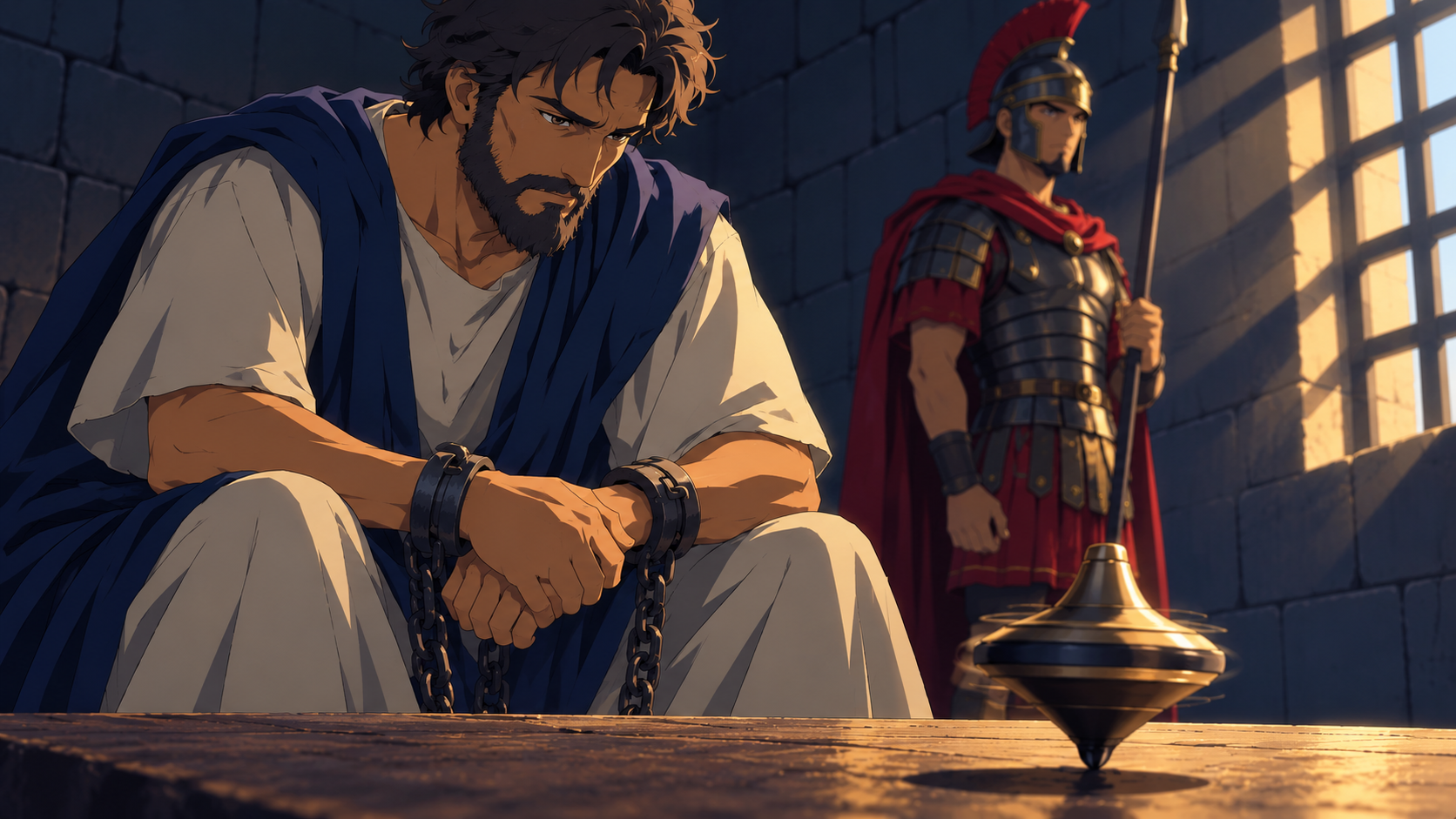
Remember the end of the movie Inception? The top is spinning on the table, and you're just sitting there holding your breath, waiting to see whether it falls over or not. That tiny piece of spinning metal is going to tell you if the main character is back in reality or if he's still stuck in a dream. And then, right as it seems to wobble, the screen just cuts to black. Come on man! Give it another two seconds! I sat in the theater absolutely unsatisfied. And the show Firefly. One perfect season of television. I got attached to these space cowboys, I want to know what happens next in this amazing space western, and Fox just cancels it. Apparently, my personal emotional investment wasn't part of the corporate calculations. I absolutely hate stories that end without resolving the issue. I want closure. I want happily ever after.
So I had the same problem the first time I read the Book of Acts as a teenager. I got to the end of chapter twenty-eight, flipped the page expecting to find out what happened to Paul and Peter and the rest of the early church—Book of Romans—I’m like, "Wait, what? Do I have missing pages? What happened at the trial? When does Paul get out of jail?" We’ve followed Paul for years now, all the way to Rome. After all the bloody beatings, the kangaroo courts, the shipwreck—surely Luke’s going to tell us how it all turns out. He had to know! Luke had to know. But he’s like, “No. The End.” That’s not very satisfying.
We want to know how the story turns out. This story. Any story. Especially our own story. We want to know if the situation gets better, if the broken marriage gets repaired, if we finally get unstuck from that dead-end job that's draining the life out of us. We all have our own unresolved plotlines hanging over our heads. The illness that lingers while the doctors just write another prescription. The kid who keeps making self-destructive choices, blowing up their life and rejecting the faith they were raised in. All these unresolved issues, we keep turning the pages hoping for something good. We tell ourselves a better chapter will begin just as soon as this one gets sorted out. But under all this frustration are the heavier questions that keep us awake at night. Has God forgotten about us? Are we going to turn the page and—the end. Did we do something wrong? Take a wrong turn? Where’s my happy ever after?
Then we’re reading our freakin’ Bible, cruising through Acts, having a nice time reading about being shipwrecked on a remote island, I mean it’s a real page-turner, and get to the end of the book—Paul finally gets to Rome, he’s locked up in chains waiting for his trial—the end! Credits roll. No post-credit bonus scene. Just house lights.
We’ve been going through the Book of Acts line by line for about two years, today we’re in the final chapter. Paul has just survived a massive shipwreck at the end of chapter twenty-seven. The cruise to Rome didn’t go so well, the ship is destroyed by a storm and everyone is washed up on a random beach. Acts chapter 28:1 says,
“Once we were safe on shore, we learned that we were on the island of Malta. The people of the island were very kind to us. It was cold and rainy, so they built a fire on the shore to welcome us. As Paul gathered an armful of sticks and was laying them on the fire, a poisonous snake, driven out by the heat, bit him on the hand. The people of the island saw it hanging from his hand and said to each other, “A murderer, no doubt! Though he escaped the sea, justice will not permit him to live.” But Paul shook off the snake into the fire and was unharmed. The people waited for him to swell up or suddenly drop dead. But when they had waited a long time and saw that he was not harmed, they changed their minds and decided he was a god.”
I love how the natives flip their opinion of Paul! First they see him get bitten by a viper and decide he must be a murderer. The sea didn't kill him, so snake "Justice" is finishing the job. But when he just shakes it off in the fire and doesn’t die, they figure he's a god instead. It’s only logical—those are the only two choices. They’re quick to make up their mind about Paul, but they don’t have a clue what God’s actually doing. Things happen in life and people are so quick to assume they understand what it means. We could learn from this: circumstances are usually just circumstances. When we go through bad times, we shouldn’t assume it means God has rejected us.
Acts 28:7 says,
“Near the shore where we landed was an estate belonging to Publius, the chief official of the island. He welcomed us and treated us kindly for three days. As it happened, Publius’s father was ill with fever and dysentery. Paul went in and prayed for him, and laying his hands on him, he healed him. Then all the other sick people on the island came and were healed. As a result, we were showered with honors, and when the time came to sail, people supplied us with everything we would need for the trip.”
The Gospel goes into a new place and God backs it up with signs and wonders. Remember, Paul’s just a prisoner in this shipwrecked crew, barely more than cargo, but the natives think he’s a god, probably why he gets to meet the chief. He prays for the chieftain’s dying father, heals him, and then the islanders line up to be healed. God's doing more than just healing sick people here. They’re going to be stuck on this island all winter. But instead of pouting and complaining about his derailed itinerary, Paul gets to work where he is. God uses him right where he is stuck. It makes a lasting difference, too. 500 years later, there’s a thriving Christian community on Malta, and even today, the people consider this account in Acts to be when the Gospel came to their island. Eventually, the weather clears and they can leave.
Acts 28:11 says,
“It was three months after the shipwreck that we set sail on another ship that had wintered at the island—an Alexandrian ship with the twin gods as its figurehead. Our first stop was Syracuse, where we stayed three days. From there we sailed across to Rhegium. A day later a south wind began blowing, so the following day we sailed up the coast to Puteoli. There we found some believers, who invited us to spend a week with them. And so we came to Rome. The brothers and sisters in Rome had heard we were coming, and they came to meet us at the Forum on the Appian Way. Others joined us at The Three Taverns. When Paul saw them, he was encouraged and thanked God. When we arrived in Rome, Paul was permitted to have his own private lodging, though he was guarded by a soldier.”
As Paul finally approaches Rome, local Christians hear he's coming and travel miles out of the city just to meet him on the road. Most of them went to a place called the Forum but the cool kids showed up at the Three Taverns. Live blues and better beer. Just kidding. Although, Three Taverns Lutheran Church has a nice ring to it. Paul’s glad to see everyone and very encouraged by all these christians showing up. Even the great Apostle Paul—the guy who writes letters encouraging everyone else—also desperately needs people to encourage him. So, God keeps his promise to get Paul to Rome. He’s thankful, even if he’s worn out and wearing chains when he gets there.
Paul tells his story again in Acts 28:17 which says,
Three days after Paul’s arrival, he called together the local Jewish leaders. He said to them, “Brothers, I was arrested in Jerusalem and handed over to the Roman government, even though I had done nothing against our people or the customs of our ancestors. The Romans tried me and wanted to release me, because they found no cause for the death sentence. But when the Jewish leaders protested the decision, I felt it necessary to appeal to Caesar, even though I had no desire to press charges against my own people. I asked you to come here today so we could get acquainted and so I could explain to you that I am bound with this chain because I believe that the hope of Israel—the Messiah—has already come.” They replied, “We have had no letters from Judea or reports against you from anyone who has come here. But we want to hear what you believe, for the only thing we know about this movement is that it is denounced everywhere.”
Paul did what he always did. He went to his own people first. He aches for his Jewish brothers and sisters to know their Messiah. He tells them all about everything that’s been going on. The Jewish leaders in Rome hadn’t heard anything about Paul—a definite blessing of a world without internet. They had heard about Christianity but what they heard was all bad.
They agreed to hear him out anyway. Acts 28:26 says,
So a time was set, and on that day a large number of people came to Paul’s lodging. He explained and testified about the Kingdom of God and tried to persuade them about Jesus from the Scriptures. Using the law of Moses and the books of the prophets, he spoke to them from morning until evening. Some were persuaded by the things he said, but others did not believe. And after they had argued back and forth among themselves, they left with this final word from Paul: “The Holy Spirit was right when he said to your ancestors through Isaiah the prophet, ‘Go and say to this people: When you hear what I say, you will not understand. When you see what I do, you will not comprehend. For the hearts of these people are hardened, and their ears cannot hear, and they have closed their eyes— so their eyes cannot see, and their ears cannot hear, and their hearts cannot understand, and they cannot turn to me and let me heal them.’ So I want you to know that this salvation from God has also been offered to the Gentiles, and they will accept it.”
From morning to evening, Paul preaches his guts out. Tries every trick he knows. Some are persuaded, but others flat-out disbelieve. Had to be so frustrating. The book ends with Paul quoting a brutal message from the prophet Isaiah. When God called Isaiah to be a prophet, He said the people weren’t going to listen to him. His job was to speak, but most people wouldn’t pay any attention. The quote exposes the terrifying danger of hearing God’s Word while stubbornly refusing to receive it. But their rejection won’t stop the momentum we’ve watched grow throughout Acts. God’s salvation will keep going—it will continue reaching the nations. God’s salvation through Christ is going to the Gentiles. Jesus is the hope of Israel. Paul desperately wants his own people to receive Him, because rejecting their Messiah means rejecting the salvation God promised them. Belonging to Israel by ancestry cannot save them apart from Christ. But their rejection won’t stop that salvation from reaching the rest of the world.
And then Luke just drops the ending of the entire book—here’s the grand finale...
Acts 28:30 says,
“For the next two years, Paul lived in Rome at his own expense. He welcomed all who visited him, boldly proclaiming the Kingdom of God and teaching about the Lord Jesus Christ. And no one tried to stop him.”
Paul’s under house arrest awaiting trial but he spends his days welcoming people and talking about Jesus. The end. What the heck? Does he get released? What happens in the courtroom? Be nice to include those details, you know?
Between the Gospel of Luke and the Book of Acts, Luke wrote 27% of the New Testament. Word for word, that’s more than Paul. He had a lot to say. But he doesn’t say anything about any of this. He knew what happened next, but he just leaves us hanging.
This unresolved ending is very unsatisfying. Kind of like the rest of our lives sometimes? For some reason we think we deserve a full explanation from God about all kinds of things. We want clear cut improvement in our lives to prove God's really faithful. We laugh at the silly natives of Malta going from "he's cursed" to "he's a god," but we do the same thing. When everything’s going well, we figure God's finally rewarding our hard work. When the bottom drops out, we think He’s neglecting us. We’re tempted to think being faithful is a sucker's game. And Isaiah’s brutal warning about not listening to God’s word brings the bloody nose right to our face. We’re so critical about other people refusing to listen to the gospel, to believe in Jesus, but we plug our own ears and close our eyes—what are we stubbornly refusing to hear?
We sit in the church, hearing Christ’s promise of grace, of salvation and hope—but we brush it off and secretly wish for a different guarantee. We want our happily-ever-after now. We want a divine vending machine. Make this illness end. Make my marriage not fail. Make my career take off. We want God to resolve our circumstances right here, right now. We throw spiritual tantrums when he won't give us the ending we demand. We harden our hearts with our lack of faith, our lack of trust.
But that’s not how the Gospel works. It’s not how hope works. We need to remember the ending of the Book of Acts, the way Paul kept his focus on Jesus instead of his circumstances. We need to look at the Savior who stepped into our messy, unresolved story. Jesus knows exactly what it means to live a life that feels unresolved—rejection, confinement, suffering—death. He endured the same things that make us wonder if God has abandoned us. At the cross, Jesus carried all your sin. He took your stubbornness, your distrust, your arrogant demands that God prove Himself on your terms, and He took it with Him to the grave. Then His resurrection declares that your sin, your death, and your current circumstances don’t get the final word! Because Christ died and rose for you, your sins are completely forgiven—everything that separated you from God has been healed. You no longer belong to the world and the devil, now you belong to the family of God. Paul ended up in chains but that couldn't cancel Christ’s promise to him, and your circumstances can't cancel His promise to you. The same promise Paul preached in that rented house is yours. Christ gives you absolute forgiveness right now. You might not know how this chapter of your life will turn out. But you know exactly what Jesus has done for you and where that’s taking you. His grace won’t expire while you wait. And God’s word promises you the ultimate resolution. Your story won't stay unresolved forever. Christ will physically raise you from the dead, then you’ll live on a new earth, under a new heaven, with Jesus and all God’s people forever. And that will be a good thing. Even if you can’t imagine how it could be. And even now, until that day, he hasn't left you to suffer alone. He’s with you. You can talk to Him anytime, anywhere. He’s inviting you to be in his family, His church. You are not alone.
So how do we spend our days when we don't know how things will turn out? Like Paul at the end of Acts. We don't need the ending all wrapped up to take the next faithful step. Start by telling God how you feel stuck. Be honest. Ask Him for some relief. For direction. For strength. You don't need to slap a fake, plastic smile on your pain and pretend everything’s okay. It's perfectly fine to admit things feel like garbage right now. Just hear His word and receive His gifts even when the situation is unresolved. And let the people around you actually help. Remember the great Apostle Paul needing courage when the believers showed up on the road? Tell someone at church where you're struggling. Ask someone at church how they're struggling. Let’s carry each other’s burdens instead of everyone pretending to be spiritual superheroes. Just take the next faithful step, whatever simple act of love is available to us. We don't have to fix our entire disaster of a life before we can show some kindness. Talk about your faith and let God worry about the results. We’re free to just live right in the middle of the mess, knowing the heavy lifting of our salvation is already finished. Trust that Christ will keep His promise, even when this chapter doesn’t resolve the way we hoped.
I still want to know how the story ends. Movies, books, my life. I still want closure. I want to see all the loose ends tied up in a neat little bow. As far as Paul goes, history tells us in 62 AD he got out of jail for a few years but was arrested and beheaded in 67 or 68 as part of Nero’s persecution of Christians. Peter was martyred a couple years before that. Luke most likely knew all these things but he ends his book with the top still spinning. But it’s certainly not because the series was canceled.
The Book of Acts leaves us with something we need a lot more than an update on Paul’s court appearance. It leaves us with the rock-solid truth that Jesus is faithful even when the story is uncertain. We can stop waiting for closure — His promise gives us plenty of reason to trust Him while the loose ends are still loose. Which means we can stop putting off our life until our circumstances miraculously resolve. We can ask God for a better tomorrow, but we can also trust that he’s standing right beside us today. When we get to Acts 28, we've reached the end of the book, but we certainly haven't reached the end of what Jesus is doing. Paul might still be in chains. But people are coming to his door. He’s writing letters that will become the Bible. Right up to the end, Paul makes sure people are hearing about Jesus. Even after he dies. Generation after generation. And thanks be to God, that includes us—the gospel has reached you. Christ died for you. Christ rose for you. He hasn’t forgotten you. Even if you’re not where you hoped you’d be by now. You might feel stuck. His promise stands. The Word of God remains true. This will not be the end. Not of you. Not of anything that matters eternally. Amen.
Prayer
Heavenly Father, thank You for being faithful while the loose ends of our lives are still loose. We don’t know how every situation will turn out, but we know You have promised us a future that even death cannot take away.
Thank You for bringing the gospel all the way to us. As we finish this journey through Acts, continue Your work among us and through us, so that others may hear of Your mercy and find their hope in Christ. In Jesus’ name, amen.