
Acts 21:1-16 "Telling God No"
The year was 2004, and as far as I was concerned, my life was pretty "cool."
I’d spent years building my own production company, FeverDream Productions. Kim and I had a nice house about 30 miles from here just north of Downtown, Von was four and Angel was two, and I had a full-throttle schedule doing audio, video, and graphic design work. On top of all that, I was finishing up my first solo album “Human Liturgy.” And if that wasn’t enough, I was also the music director for a sweet little Anglican church plant that I absolutely loved. I had creative freedom, and life was very full.
Then out of nowhere, I got a call from a church that had hired my company to make a video for their building campaign a couple years before that. A church called CrossPoint. They wanted to know if I’d be interested in leading their music on Sundays.
I had learned a long time ago to never immediately say “no” but… As far as I was concerned the answer was going to be Absolutely not.
Frank Hart, leading a praise band in the suburbs?! Come on! Surely God had bigger, more creative, more important things in store for me than leading Chris Tomlin cover tunes in a windowless gymnasium. No thanks. After everything I had accomplished? Everything I had built up? Every instinct I had screamed, "Protect your pride. Protect your dreams. Say no."
So I sat there, praying about it, thinking about how to turn them down—and God interrupted my plan. I didn’t hear an audible voice from heaven, but somehow it was as if God rolled His eyes at me and was like, "Go ahead then, Frankie. Tell me ‘no’ then'"
We had had that conversation before about other things. I already knew "No" and "Lord" are two words that should never be put together. If He is Lord, the answer can’t be "no." Because if it is, then I’m not really treating Him as Lord, am I?
So, I said “yes” and started learning Chris Tomlin songs.
Guess what happened a week after I started working at the church? It’s still painful to even think about this. Some friends of mine were going on a six-week tour of Europe and wanted me to play guitar. I had never been to Europe, I really wanted to go, but I had to turn them down. I’ve still never been. So while my friends were eating croissants in Paris and walking the streets of London, I was in Katy figuring out how to make the second verse of 'How Great Is Our God' sound interesting.
We all say we want God’s will for our life. But when we ask Him to show us "His will," what are we really asking for? We’re not usually asking for God’s mission, His direction (even if it’s inconvenient). We want the version of God's will that makes us look good, feel good—where nobody gets hurt, our schedules and plans don't get disrupted, our pride doesn’t get challenged, and we stay firmly in control.
We confuse our self-preservation, our success, our security for His leading. We assume if a path involves risk, or pain, or sacrificing our comfort—it can't possibly be God's will. We love the idea of surrendering our life to God right up until He asks for the driver's seat. We pray, "Lord, lead me, guide me," but what we really mean is, "Lord, rubber-stamp my plans and don’t ask me to do anything crazy."
So what do we do when God leads us straight into a storm? What do we do when obedience is walking into a future that’s scary? Or we think is too hard?
Today we’re jumping back into the Book of Acts. Before Christmas last year, we wrapped up chapter 20, where Paul gave that emotional farewell to the Ephesian elders. We’ve been going through Acts line by line, verse by verse, and this morning we pick up the story in chapter 21, starting at...
Acts 21:1 which says,
"And when we had parted from them and set sail, we came by a straight course to Cos, and the next day to Rhodes, and from there to Patara. And having found a ship crossing to Phoenicia, we went aboard and set sail. When we had come in sight of Cyprus, leaving it on the left we sailed to Syria and landed at Tyre, for there the ship was to unload its cargo. Having sought out the disciples, we stayed there for seven days. And through the Spirit they were telling Paul not to go on to Jerusalem. When our days there were ended, we departed and went on our journey, and they all, with wives and children, accompanied us until we were outside the city. And kneeling down on the beach, we prayed and said farewell to one another. Then we went aboard the ship, and they returned home."
Luke—the author of Acts—is writing this down as an eyewitness. He says "we had parted" because he was right there in the traveling party. Paul isn't traveling alone. He's got a whole group with him—guys from Berea, Thessalonica, Derbe, and Asia—mostly Gentiles. They're carrying a bunch of money they had collected from the new churches to take to the Jewish Christians in Jerusalem who were having a rough time because of how the Jewish community had turned against the church—Jerusalem was a tough place for a Jew to be a Christian. Pretty cool that the Gentiles were coming to help with bags of cash. But the closer they got, the more dangerous it was.
They land at Tyre, a massive commercial hub, and Paul’s first priority is to find the local church. He spends a week with them. And a very confusing thing happens. We were told in chapter 20 that the Spirit told Paul to go to Jerusalem. But then Luke writes in verse 4 of chapter 21: “through the Spirit they were telling Paul not to go on to Jerusalem.”
What’s up with that? The Holy Spirit compelled Paul to go to Jerusalem in 20:22, but here the Spirit says not to go. Did Luke forget what he just wrote a few verses ago?
No. God doesn’t tell us everything all at once. If He did, most of us would be too afraid to do what He says.
Would we ever get married if we knew it would mean twenty years of arguing over what was for dinner? Would we ever have kids if we knew it would mean two years of waking up at 3 am to clean a disgusting mess followed by a lifetime of psychological guessing games? Would we ever get a dog if we knew it would mean walking around our neighborhood at midnight carrying a warm bag of poop?
When Jesus calls us to follow Him, He tells us about the cross, but we never really think it applies to us. Everyone wants to go to heaven but no one wants to die.
Paul knew God wanted him to go to Jerusalem. His friends at the church in Tyre had a little more information about what that trip was going to be like. It was going to be dangerous. They were pretty sure that meant Paul shouldn’t keep going. But Paul knew better. He’s still supposed to go, it was just going to suck.The Spirit wasn’t telling him to turn around—just showing him the cost of going forward.
This doesn’t mean we should ignore the wise counsel of the people God puts in our lives. It also doesn’t mean the riskier and dangerous option is always the godly one. We don’t chase pain and suffering, we follow where God leads us. God was leading Paul and the boys to Jerusalem but also warning them that it was going to be painful.
So, after a heart-wrenching scene where whole families—wives and kids included—kneel on the beach to pray, they say goodbye. Paul keeps going south...
Acts 21:7 says,
"When we had finished the voyage from Tyre, we arrived at Ptolemais, and we greeted the brothers and stayed with them for one day. On the next day we departed and came to Caesarea, and we entered the house of Philip the evangelist, who was one of the seven, and stayed with him. He had four unmarried daughters, who prophesied.”
They arrive in Caesarea, the Roman capital of the area, and stay at the house of Philip the Evangelist. Remember Philip? He was one of the original seven deacons alongside Stephen. Remember him? Decades earlier, Paul—back when he was known as Saul the Pharisee, killer of Christians—he was the one who approved the violent execution of Philip’s friend Stephen. But here we are, Paul and his buddies sleeping under Philip’s roof, eating at his table, meeting his four prophetic daughters. That’s a picture of the power of Gospel reconciliation, forgiveness and what it looks like to follow Jesus right there.
Acts 21:11 says,
“While we stayed for many days, a prophet named Agabus came down from Judea. And coming to us, he took Paul's belt and bound his own feet and hands and said, ‘Thus says the Holy Spirit, ‘This is how the Jews at Jerusalem will bind the man who owns this belt and deliver him into the hands of the Gentiles.’' When we heard this, we and the people there urged him not to go up to Jerusalem."
So they're hanging out at Philip's house, a prophet named Agabus shows up. Agabus does a bit of old fashioned prophetic street theater. He walks up to Paul, unties his leather belt—doesn’t say he asked first, a little awkward— wraps it around his own hands and feet, and warns him like the ghost of Christmas doom: “Thus says the Spirit: This is how the Jews at Jerusalem will bind the man who owns this belt.”
Gave everyone the chills, even Luke. He wrote, “When we heard this, we all tried to talk him out of going.” They begged Paul to change his mind. The Spirit said imprisonment and suffering are waiting in Jerusalem—and all of Paul’s friends thought that meant, "Danger means stop! God wants you safe! Don’t go."
But that’s not what Paul heard.
Acts 21:13 says,
"Then Paul answered, 'What are you doing, weeping and breaking my heart? For I am ready not only to be imprisoned but even to die in Jerusalem for the name of the Lord Jesus.' And since he would not be persuaded, we ceased and said, 'Let the will of the Lord be done.'"
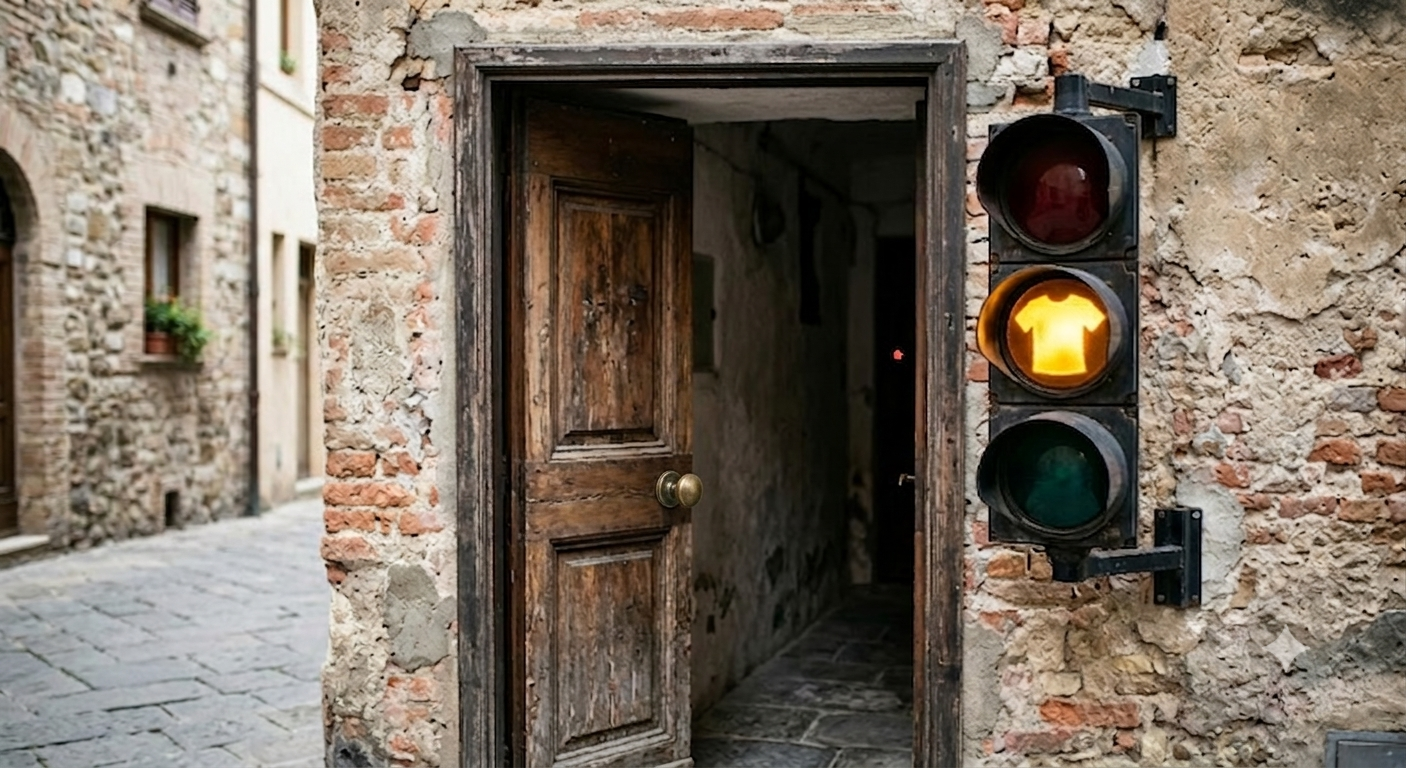
Paul doesn't doubt the prophecy was true. He knows Agabus is right. But while everyone else saw the warning as a stop sign, Paul just saw it as a blinking yellow light, heard it like when the nurse says, “This is gonna hurt a little—okay, a lot.” He’s not being reckless; he was just resolved to be obedient. So his friends finally stop panicking and pushing Paul to say “No, Lord!” They come back to faith. Trusting God anyway. “The will of the Lord be done.”
I see myself in this story and the reflection isn't pretty. How about you?
The believers in Tyre and Caesarea aren’t bad guys. They were loving, sincere, Spirit-filled Christians. They loved the Lord and they loved Paul. But when they were faced with the reality of pain and sacrifice, they immediately fell back to the default setting of self-preservation. For themselves and especially for Paul. They saw a big ugly cross on the road in front of them, and their instant reaction was to pull back and say, "God would never want this for us!"
We don’t really want to talk about the high cost of discipleship either. We have a version of Christianity that thinks personal comfort is the ultimate proof of God’s blessing. We’re pretty sure God just wants us to be happy. If the path is difficult, if something demands sacrifice, if what God has us doing starts to threaten our financial security or our social status, it couldn't possibly be from God. Why would He call us to do something difficult? We take our anxiety, our fears, our comfort, and dress them up in spiritual language—call it "discernment."
Our hearts are rotten: we want a Savior, but we don't want a Lord. We want Jesus to pay our spiritual bar tab, but we don't want Him telling us what to do—directing our footsteps if it leads to hard places. We want to control our destinies, keep our families covered in bubble wrap, and stay far away from any situation where we might actually have to suffer any discomfort for the name of Christ. We treat God’s will like a wish book that promises to keep our lives predictable and safe.
So when God calls us to step into difficult conversations, to give sacrificially, to forgive someone who ruined our reputation, or gave the order to murder our friend—when He wants us to do something hard. Like share our faith with someone even if it costs us something or feels awkward… we don’t want to do it. We say, "No, Lord." Maybe not with our words but certainly with our actions.
So, this is all very condemning. Because left to ourselves, our god is our comfort, our faith is fragile, we really only trust as long as no pain is involved, and we crumble the minute the heat gets turned up.
If the story of Acts 21 depended on Paul’s willpower or the disciples’ bravery, it would’ve ended in total failure—they would’ve just stayed where they were and sent the money by Western Union or Zelle. But they didn’t look inside to their heroic strength for courage. They just trusted the Lord. That’s what faith is. Paul was able to say, "I am ready to die in Jerusalem," because he was following a Lord and Savior who had already done it for him—and didn’t stay dead.
A few years ago we went through the Gospel of Luke. Think about the massive parallel Luke sets up here. Years earlier, the Lord Jesus set His face like flint toward Jerusalem. He told the disciples He was going to be delivered into the hands of the Gentiles, mocked, scourged, and killed—but He was going to go anyway. Remember what Peter said? He pulled Him aside and tried to stop Him! He said, "No, Lord! This will never happen to you. Not on my watch!"
Peter didn’t change Jesus’ mind either. I think His words were, “Get behind me, Satan!” He rebuked Peter and walked straight to the cross.
Christ didn't avoid the nails. He surrendered His life and safety so you could ultimately be safe forever. He did this for your sake. He allowed Himself to be bound, executed on a Roman cross so every single one of your self-preservation cowardly actions, all your idolatries of comfort, and your desperate attempts to stay in control could die with Him and be forgiven once and for all.
Because Jesus went to Jerusalem for you and paid the ultimate price for your sin, any suffering you face in your life has been completely stripped of its final power. It can wound you but it can’t destroy you. It will come to an end. It even has purpose because it will deepen your faith, your trust in God, and your hope in His promises. Suffering produces endurance, endurance produces character, and character produces hope. Hope is our ultimate gift in this life. Trusting God’s promise that He loves you and nothing in this world can separate you from His love. Any failure of nerve you have along the way has no power over you, either, It can’t condemn you—He keeps calling you back to trust in Him instead of trusting in yourself. Nothing has any power over your future except Him. Your life is hidden in the resurrected Christ who has already conquered the grave. And because He rose from the dead, you don't have to live your life afraid of it. Because you are in Christ, you are more free than anyone who ever tried to live outside Him.
So, where is God calling you to go? You ready to do it? Wherever God calls you? Whatever He calls you to do? Even if it’s going to be hard or scary?
We have to stop measuring God's will by the absence of conflict or discomfort. Just because a door is hard to walk through doesn't mean God didn't open it. When we face a difficult decision, or a hard conversation, or an opportunity to serve God in a way that disrupts our routine… the question to ask isn’t, "Is this safe?" The question is, "Is this faithful?"
We need to let go of the illusion of control. We spend so much time and energy trying to protect ourselves from any scratch or pain that we forget how to follow a Savior who carries a cross, and leads us to one. We can’t control the future, but we can learn how to trust the One who holds it in His hands.
These words need to always be on our lips: "The Lord's will be done." Say it when we check our bank account. Say it when we walk into the doctor's office. Say it when we're deciding how to use our time, our money, and our talents for the corner of the Kingdom He’s called us to serve in. "The Lord's will be done." It’s not a passive prayer of defeat; it’s a battle cry of freedom. And wisdom. It means: "Jesus, I belong to you, You redeemed me, and saved me, and I trust that You love me and want good things for me—even though I walk through the valley of the shadow of death and pain. I’m with you. Do whatever you want with me, because I know that, ultimately, I’m completely safe in Your hands."
I know that’s been true for me. In 2004, working in my studio with a full schedule, a growing business, and all kinds of big plans in the works, I thought I had the map of my future all figured out. When that door awkwardly swung open to lead a praise band in the suburbs... I came this close to telling God, "No, Lord."
The very first Sunday I was there they made me wear a matching yellow t-shirt with the rest of the band. Me! A matching yellow t-shirt! I would have rather been bound in chains and flogged.
Stepping into that role wasn't easy, convenient, or comfortable for me. It disrupted my entire life, it humbled my pride, and it forced me out of my air-tight comfort zone. That was 22 years ago. It turned out to be one of the greatest things God has ever done for me. That little music gig turned into a very interesting career of ministry—using everything God had ever had me doing in all the other adventures He had led me through. Everything from Bible college to all the music stuff to the creative production—it all came together like it was the plan all along.
Of course, even if that little music job had only lasted six months and never led to anything else, saying yes would still have been the faithful thing. Obedience isn’t always validated by whether we understand the outcome or not. God doesn’t always explain Himself.
When we know the Savior who set His face toward Jerusalem for us, we don't have to spend our life cowering in a corner of safety and self-preservation. We can set our face toward wherever He’s leading us and say, “Yes, Lord. Your will be done.” AMEN.
Prayer
Heavenly Father, We thank You that You did not keep us safe from a distance, but sent Your Son to bear the cross for us.
Forgive us for the ways we cling to our own comfort, safety, and control, and try to dress it up as Your leading. Strip away our fear of discomfort and give us the courage to follow Jesus wherever He calls. When the road ahead looks uncertain or difficult, remind us that our lives are ultimately hidden and secure in Him.
In every season, in every hard decision, and in every step of obedience, grant us the grace and courage to say, "Yes, Lord. Your will be done."