
"For Everyone Tired of Holding It All Together"
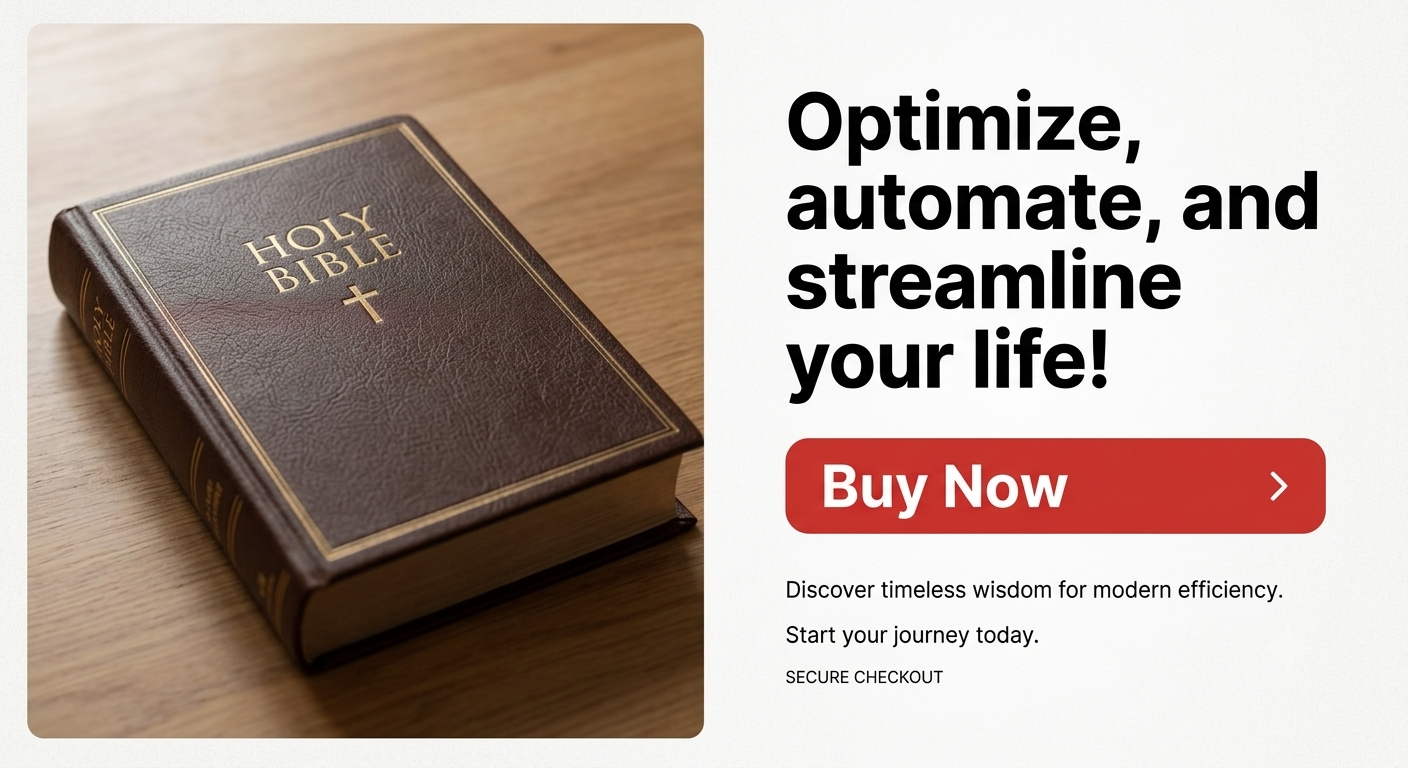
I’m an early adopter tech guy. I love gadgets, shortcuts, and almost any piece of software that promises to make things efficient. I love words like optimize, automate, and streamline. If I see those words on a website next to a red buy now button, I’ll hand over my email address, my calendar, and probably my bank account numbers. So many times I’ve gone to overhaul my digital workflow so I can be more productive, more organized, and, you know, have more time for rest and relaxation. I’ll download some ridiculously complicated task-management app promising to organize my calendar, keep track of my tasks, schedule my breaks, protect my focus time—you know, gently guide me like a sherpa into a calmer, more balanced, better life.
Then I’ll spend hours setting it up. Connect it to my email, sync it with my calendar, and create detailed reminders for everything in my life. The app ends up knowing more about my schedule than I do. I spend more time teaching the software how to organize my life than I do actually living it.
And then when it goes live... My phone starts buzzing. My watch starts beeping. My computer starts flashing banner notifications. As soon as it kicks in I’m behind. Behind on my emails. Behind on my daily tasks. Find out I’m three minutes late drinking water.
Then, just as I start to make a little progress and get into the zone… a giant notification pops up and says: “RELAX NOW. YOUR SCHEDULE DEMANDS IT.”
Nothing says serenity now quite like all your electronic devices yelling at you to calm down.
I don’t think I’m the only one who does this. Maybe your version isn’t about the latest technology but I’ll bet there’s something you think if you work hard enough, get it working just right, life will finally all come together. Maybe it’s your job, your parenting, your finances, your health, your marriage, or your Bible reading plan. We all seem to think peace is just one more hurdle away. Once we get through this busy season, then we’ll rest. Once the kids get through this stage, then we’ll breathe. Once we lose the weight, get the promotion, finish the project, pay off the debt, or finally become the disciplined person we imagine ourselves becoming, then life will click into place. But the finish line keeps moving, doesn’t it?
Last week, we started a series called Comfortable Words—talking about the Words of Comfort we say every week after the sermon. We started in 1st John with the words “If we say we have no sin, we deceive ourselves, and the truth is not in us.” A call to stop pretending we don’t have sin, stop trying to hide our sin, and bring it into the light. Acknowledge we can’t fix ourselves. We can’t save ourselves. But the God who sees everything forgives all us sinners because Jesus is on our side, He’s our Advocate. And then, once we’re forgiven, now what? What about when we sin again? Why should we think God wants to keep forgiving us over and over? That’s where the next Comfortable Word speaks to us. Jesus doesn’t hand us a checklist or seven habits of highly effective Christians, expecting us to figure it out. He comes down to us when we’re tired and discouraged and gives us words of comfort.
So, after the sermon each week, after I’ve finished rummaging through your personal email and texts to point out all your egregious sins—mine, too—we take a minute to confess. Call it what it is, we have sinned and we are sinners. That’s when we hear the Comfortable Words, because the human heart has a short memory. We confess, hear forgiveness, and tend to immediately start wondering whether it really applies to us. We need those words of comfort every week.
Today we’re looking at the first one. It comes from Matthew chapter 11. Jesus has been teaching, healing, and performing miracles all over Galilee. People have watched Him do all these things, but many still refuse to believe.
So in Matthew 11:28 Jesus says this,
“Come to me, all who labor and are heavy laden, and I will give you rest. Take my yoke upon you, and learn from me, for I am gentle and lowly in heart, and you will find rest for your souls. For my yoke is easy, and my burden is light.”
He’s not only talking to the emotionally balanced, spiritually successful people who complete their entire to-do list before breakfast. He’s also talking to the tired, unmotivated people who have given up making lists altogether. People drowning in the ordinary burdens of life. Grief is heavy. Anxiety is heavy. Caring for someone you love is heavy. Parenting is heavy. Financial uncertainty is heavy. Man, sometimes checking your email feels too heavy.
Sometimes we have soul-level exhaustion. When we’re tired of trying to make ourselves acceptable. Trying to be right all the time. Trying to prove we’re good enough for God, good enough for everyone else—even good enough for ourselves. There’s no end because there’s always one more thing we could’ve done better. Always one more failure to explain, one more weakness to hide, and all those annoying people online who appear to be succeeding at life with such infuriating ease.
So to all that, Jesus doesn’t offer a better technique for carrying all those burdens. He tells us to come to Him and He’ll give us rest. And what does that rest look like?
It’s weird because then He says, “Take my yoke upon you.” That doesn’t sound like rest because a yoke is still something you put on to work… something you carry. Jesus isn’t promising that following Him means nothing difficult is in our future. He’s not offering a burden-free life with unlimited PTO. A yoke is what’s put around the neck of an ox so they can pull a plow. But also, and this is what the people listening to Jesus probably knew that we don’t… When agrarian cultures were training a young ox that didn’t know how to work, sometimes they’d yoke it with an older, stronger ox until the young one got the hang of it. So, in rabbinical tradition, a yoke represented submitting to a rabbi and learning their teaching—learning what their teaching required. That should bring this image to life for us. Jesus is saying, “Stop living under all those other heavy-handed teachers. Stop being discipled by fear, guilt, ambition, other people’s expectations, and your desperate need to prove yourself to everyone. “Take my yoke upon you and learn from Me.” Then He tells us what kind of Lord He’s going to be. He says He’s gentle and lowly in heart. The Lord of heaven and earth tells worn out sinners what His heart is like toward them. He isn’t surprised that you’re a sinner. Or that you’re tired. He’s not rolling His eyes because you failed again. He promises to be gentle with you. His yoke is easy, it was made just for you… But that doesn’t mean discipleship is going to be painless, but Jesus promises not to crush the people who come to Him. He promises rest for the soul. This is the end of trying to save yourself.
So, Matthew gives us the invitation to come all you weary; the next comfortable word in John chapter 3 gives us a glimpse into God’s heart.
It starts with an interview. John 3:1 says:
“Now there was a man of the Pharisees named Nicodemus, a ruler of the Jews. This man came to Jesus by night and said to him, ‘Rabbi, we know that you are a teacher come from God, for no one can do these signs that you do unless God is with him.’”
Nicodemus was a Pharisee and a ruler of the Jews. Later, Jesus calls him “the teacher of Israel.” He was educated, respected, disciplined, moral—a rock star believer. If anyone could approach Jesus with their impressive résumé, it was Nicodemus. But it tells us he comes at night. Wonder why that is? Maybe he doesn’t want his religious friends to see him talking to Jesus. In John’s Gospel, darkness also has spiritual connotations. Nicodemus knows a lot about theology, but he still can’t see what God is doing right in front of him. He opens with a compliment, as if he’s beginning a polite conversation between professional colleagues.
Jesus skips the small talk. John 3:3 says:
“Jesus answered him, ‘Truly, truly, I say to you, unless one is born again he cannot see the kingdom of God.’” Nicodemus hasn’t even asked a question, and Jesus gets to the point of what he really needs to know: “How do I enter the kingdom of heaven?”
Jesus says, “You have to be born again.” The phrase can also mean “born from above.” Either way, it’s the same point. Nicodemus doesn’t need another interesting spiritual conversation. He needs a completely new life, and nobody has anything to do with their own birth. Nobody is born because they made a five-year plan and applied themselves. Nobody puts “Successfully Arranged My Own Conception and Delivery” on a résumé. Birth happens to you. Life is received. Salvation is received.
John 3:4 says:
“Nicodemus said to him, ‘How can a man be born when he is old? Can he enter a second time into his mother’s womb and be born?’”
Thanks for the mental image, Nick. Ugh. He’s not wrong, though, it’s impossible—how’s a person supposed to be born again? He wants Jesus to give him something he can understand, something he can do. “Make it hard, I don’t care. Tell me what to do, and I’ll do it.”
Jesus doesn’t make it hard, He makes it impossible.
John 3:5 says:
“Truly, truly, I say to you, unless one is born of water and the Spirit, he cannot enter the kingdom of God. That which is born of the flesh is flesh, and that which is born of the Spirit is spirit. Do not marvel that I said to you, ‘You must be born again.’ The wind blows where it wishes, and you hear its sound, but you don’t know where it comes from or where it goes. So it is with everyone who is born of the Spirit.”
Impossible for man but not impossible for God. It has to come from outside of ourselves. Jesus points Nicodemus outside himself. New birth comes through water and the Spirit. This is why we Lutherans have always heard Baptism in these words—our understanding of baptism. Baptism isn’t our demonstration of our commitment to God. It’s God doing something to us. He joins His Word of promise to water and gives what He promises: forgiveness, life, rebirth. Jesus says the only thing we can accomplish with our flesh, by our own effort, is produce more flesh. Human effort produces more human effort. We can improve our habits and manage our behavior, but we can’t generate new spiritual life through willpower. We have to be born again—it’s God’s Spirit that gives life.
John 3:9 says:
“Nicodemus said to him, ‘How can these things be?’ Jesus answered him, ‘Are you the teacher of Israel and yet you do not understand these things? Truly, truly, I say to you, we speak of what we know, and bear witness to what we have seen, but you do not receive our testimony. If I have told you earthly things and you do not believe, how can you believe if I tell you heavenly things?’”
Nicodemus is confused, “How can these things be?” Jesus is like, “Are you the teacher of Israel and yet you do not understand these things?”
Sounds like a little jab to me. “You’re the teacher of Israel, and you don’t understand this?” Nicodemus has spent his life studying how people can get close to God. Jesus tells him nobody has climbed into heaven and brought the answer back down. The answer came down on His own.
John 3:13 Jesus continues,
“No one has ascended into heaven except he who descended from heaven, the Son of Man. And as Moses lifted up the serpent in the wilderness, so must the Son of Man be lifted up, that whoever believes in him may have eternal life.”
This is from a story about the Israelites in the Book of Numbers. They had rebelled against God, again, and poisonous snakes filled the camp. People were bitten and dying. God had a very strange remedy, He told Moses to make a bronze serpent and lift it on a pole. Anyone who looked at it would live. Just look at it. God didn’t give them a twelve-step venom-removal program. He didn’t tell them to crawl three laps around the camp on their knees to prove they were sincere. They had to look outside themselves at what God provided for them, and they would be saved. Jesus said that serpent was pointing to Him. He was going to be lifted up on the cross. He was going to ascend to heaven. Anyone who has been bitten by the poisonous fangs of the world, the flesh, and the devil need to look to Jesus and live.
This is the context of the second of the Comfortable Words we hear every week:
“For God so loved the world, that he gave his only Son, that whoever believes in him should not perish but have eternal life. For God did not send his Son into the world to condemn the world, but in order that the world might be saved through him.” John 3:16-17
The most famous verse in the Bible is in the context of Nicodemus, being born again, and poisonous snakes. It’s amazing how much richer familiar parts of the Bible become when we hear the surrounding verses. Jesus came to save the world because God loves the world. He doesn’t love the world because it’s so lovable. It’s in rebellion against its Creator. It’s lost, hostile, dark, and dying of demonic snake venom. But God loves it anyway. He didn’t wait for us to get it together so we could become worthy of being saved. He gave His Son because we never would be.
John 3:18 says:
“Whoever believes in him is not condemned, but whoever does not believe is condemned already, because he has not believed in the name of the only Son of God. And this is the judgment: the light has come into the world, and people loved the darkness rather than the light because their works were evil. For everyone who does wicked things hates the light and does not come to the light, lest his works should be exposed. But whoever does what is true comes to the light, so that it may be clearly seen that his works have been carried out in God.”
Nicodemus arrived in the dark with his impressive religious résumé. Jesus tells him to stop looking at what he can accomplish and look at the Son of Man lifted up for him. That’s what it means to come to Jesus. That’s where rest is found.
But that’s not the kind of rest we’re looking for. We want relief, but we want to be in control. We want to do it. Jesus says we have to stop trying to justify ourselves. We have to admit we can’t do it. But we’d rather have Jesus as a consultant than a Savior. We want useful tips, better habits, and a slightly upgraded version of ourselves. Jesus says, “Slow down Overcomer! You don’t need to power up to the next level, you need to be born again.” You don’t need an update. You need new life. Nicodemus knew Scripture, he followed the rules, he was respected, probably never checked his phone during church or napped during the sermon.
That’s all great but Jesus told him he couldn’t even see the kingdom from where he was.
God’s Law doesn’t demand improvement. It demands perfection. His Law is perfect. God demands that we perfectly fear, love, and trust Him above everything else, always and completely. If you’re paying attention then you should realize that means it’s hopeless for you. You can’t do it. Not even close. So what do we do? We spin the story. Our anger becomes passion. Gossip becomes prayer requests. Greed becomes providing for our family. Refusal to forgive becomes healthy boundaries. We don’t just commit sins… We hire them a public-relations department. But pretending is exhausting. Defending ourselves is exhausting. Trying to carry our own righteousness is exhausting.
Jesus doesn’t expose our failure because He’s mean… He’s not surprised by it. He already knew. He loves us, that’s why He came to save us from it. “Come to me, all who labor and are heavy laden, and I will give you rest.” He doesn’t teach us how to carry the burden. He takes it. He carried the full weight of God’s Law for us. He actually did fear, love, and trust the Father perfectly. He took the yoke of the Law on Himself and carried it on the cross. Jesus took all our poison. Our pride, hypocrisy, fear, shame, and desperate attempts to save ourselves were laid on Him. He took the judgment that belonged to us.
Look to Him. It’s not about inspecting the quality of our faith. It’s not about measuring how forgiven we feel. It’s not about whether our repentance is emotional enough. Look to Christ. Weak faith and strong faith receive the same Savior—all faith is a gift from God, and any faith is enough faith. The power is in the gift not the one receiving the gift. Your forgiveness doesn’t depend on whether you feel like you had a good spiritual week or not. Your salvation doesn’t depend on your ability to hold it all together. It rests on Christ. And Christ sustains all things by the power of His might.
So, we’re not passive. We’re free.
Because we’ve received help, we’re free to offer help to everyone around us. God saved you for a reason… do you know what that reason is? Because He wanted to! Let that attitude drive everything you do with your salvation. Use your new life to love and serve the people He puts around you. And let the people in your life help you. Let people help. Jesus created His Church to be a body because none of us are supposed to do this on our own. Take His yoke upon you, there’s work to be done. Worship God. Love people.
Do the work He’s called you to do until you’re tired. It’ll be a good tired. But the Christian life isn’t trying to work hard enough to deserve the rest Jesus promises. It’s learning to live from the rest He has already given you.
So maybe I don’t need another app telling me how to organize my life so I can have more time for rest. I definitely don’t need a notification saying, “RELAX NOW. YOUR SCHEDULE DEMANDS IT.” It’s also not what Jesus is saying… “REST NOW. YOUR SAVIOR DEMANDS IT” when He says, “Come to me, all who labor and are heavy laden, and I will give you rest.” He’s offering comfort, not more stress. He already knows the world is a hard place. That’s why Jesus shows us His heart, “For God so loved the world, that he gave his only Son, that whoever believes in him should not perish but have eternal life.” He loved. He gave. Christ came down to us. He doesn’t expect us to work our way up to Him. So you can stop acting like everything depends on you. It most certainly doesn’t. The work that matters most has already been finished. The Son has already been given. And when Jesus says, “Come to me,” that isn’t another demand. It’s a promise that He will receive you. These are the promises of Christ’s word. Thanks be to God. AMEN.
Prayer
Father in Heaven,
We confess that we keep trying to carry what You never asked us to carry. We try to prove ourselves, manage every outcome, control every detail, and work our way into peace. We act as though everything depends on us, and then we wonder why our souls are tired.
Thank You for the comforting words of Jesus. Teach us to hear them as a promise, not more demands.
Thank You that Jesus came down to us when we could never climb our way up to You. Thank You that He carried our sin, our condemnation, and the full weight of the Law to the cross. Thank You that the work is finished, the tomb is empty, and our salvation rests safely in Him.
When we’re tempted to look inward at our performance, turn our eyes back to Christ. When we feel weak, remind us that the strength of our faith is not what saves us—the strength of our Savior does. When we’re exhausted, teach us to receive Your gifts, accept our limits, and trust that You remain God even when we stop working.
Keep these Comfortable Words close to our hearts: Jesus receives the weary, and You loved the world enough to give Your Son.
Give us rest in Christ today, and keep us in Him until the day when every burden is gone and faith becomes sight.
In the name of Jesus, our Savior and our rest. Amen.