
"Who Are You"
Social media profiles —you know, where you have to describe yourself in a short sentence? I always hate it. Because what do you even say? Do I go with “pastor”? “Dad”? “Guy who used to be in a hard rock band and thinks he’s funny now”? No matter what you put it’s like, “No, that’s too serious.” “No, that’s too stupid.” “No, that sounds like I’m trying too hard to not be serious or stupid.” Because—it’s not just a description. I’m trying to figure out who I am and how I want people to think of me. Thanks Facebook, for the existential crisis.
Because really the answer’s always changing. On a good week, it’s easy, I feel fine. But one bad moment, and the whole thing makes me feel like a fraud. It’s just a social media bio but it’s also Who even am I? One sentence! What’s my core identity? Most of us have been trying to figure that out ever since we bought that cool hat at the state fair—going to wear it everywhere, this is who I am now! Or grew our first moustache, or… I’m not sure what the ladies do but it probably has something to do with makeup or cutting bangs or something. In high school I wanted to grow my hair long and be a Jesus Freak hippy but my mom wouldn’t let me. And then the Bible college I went to wouldn’t let me. By the time I could finally start letting it grow, it started falling out. God wouldn’t let me. Oh the trials and tribulations.
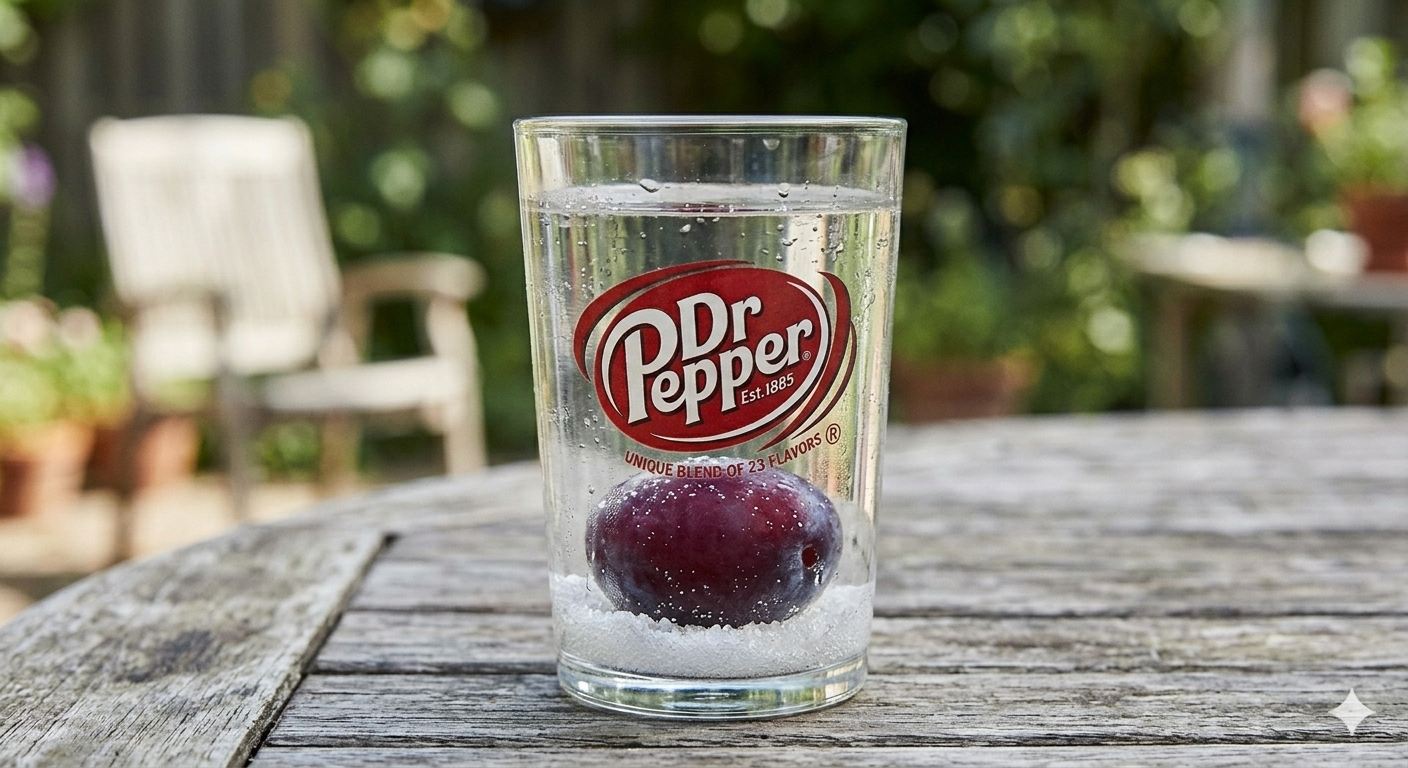
But we all do it. We try to find our identity in so many silly places… in being an Astros fan, or the Texans, or if we have low self esteem, the Cowboys. I only say that because it was one of my brothers’ favorite team when we were growing up. But, you know, if sportsball isn’t our thing then maybe we’ll go politics: Political left, political right… just don’t try to stay in the middle of the road or you’ll get run over. Lots of people get their identity from the music they like: Swifties, George Strait fans… what are they called? Straitsters? I used to be a member of the KISS Army, which probably explains a thing or two. We’ll get our identity from anything. Remember the Dr Pepper commercial? “I’m a Pepper, you’re a Pepper, wouldn’t you like to be a Pepper too?” Sure, get your identity from sugar water that tastes like plums. And all that’s fine—we can have fun with those things. But we need to be careful, because the world really does want us to get so wrapped up in all these group identities that we forget who we really are.
Who we really are. I don’t mean our vocations: husband, father, pastor, or whatever we do for a living. Those are callings, not our identity.
This is where Jesus comes in. He doesn’t just suggest where we get our identity—He demands it. Our identity has to come from Him. Try to get it anywhere else and we’ll end up being a fraud. Looking as ridiculous as when we stand before God at the end of time as that sophomore school photo when we were expressing our individuality with a mullet and bowtie. Our first and primary identity—before anything else—has to be this: who we are in Christ. Your name, above everything else, is Christian. Servant of God. Beloved child of God. And any other role you have—every label, every title, every interest, every vocation—has to be put under that. So when someone asks who you are, what you do, what you’re all about, the first answer shouldn’t be any of the temporal things that don’t last: American, Texan, parent, or your job, or whatever you’re into. The first needs to be: I belong to Jesus. I’m a Christian. Because that identity is what needs to shape and direct everything else.
But I know it feels a lot more complicated than that—that’s why we’re talking about it. Our identity is shaped by all the things we love, all the things we fear—the stories we tell ourselves about where we came from and where we’re going. So, we’re constantly being formed and reformed—not just by what we believe, but by what we do, by what we make time for, what we prioritize—what we give our time and attention to.
Because whatever we let shape our time will shape our heart. And whatever shapes our heart is who we’re going to be.
Even inside the church… who are we? What does it mean to be a Christian? Christians aren’t exactly the toast of the town these days. A lot of people see us as the enemy. They think we’re a bunch of hypocrites. Haters. Closed minded. Out of touch. Why is that?
Probably because instead of being shaped by Christ, we’re mostly shaped by conflict. We define ourselves more by what we’re against than what we’re for—what we hate more than what we love. Poison creeps in, our identity shifts from “I belong to Jesus” to “I’m not like those people.” You know who “those people” are, right? Well, I don’t only mean THOSE people. I also mean other Christians who underline different parts of the Bible than we do… Can’t stand those people! Or the ones who like church to look and feel a different way than we do. Ugh! I wonder why Christians get a bad reputation. Have you seen the way we treat each other online? Brothers and sisters fighting over every little thing. There’s no conversations—just stupid battles. Instead of building each other up, we tear each other apart. And we do it in public! Everyone is watching! Probably why they’d rather go to a Sunday morning soccer game.
Boil down most of what the Bible says about how we’re actually supposed to treat people and it comes down to this: Put up with each other, and give people a freakin’ break.
There’s so much division, but the problem isn’t just that we’re divided. We’ve forgotten who we are. We’ve lost our identity.
So into all that confusion, into all that instability, God speaks.
Our text this morning comes from 1 Peter chapter 2.
Before we get into it, let’s zoom out a little and see what the letter’s about. Peter’s writing to Christians—people who have heard the Word of God and come to faith in Jesus. In chapter one, he starts with what God has done, reminding them their salvation isn’t something they earned, but something they were promised and something that was accomplished for them. Now, in chapter two, he shifts to formation. Shows them what it looks like to live as someone who belongs to Christ—to live as people who are being shaped by Jesus. It’s not going to be a list of ways to earn our identity, but a call to live out the identity we’ve already been given—to live up to it.
1st Peter 2:1 says this:
“So put away all malice and all deceit and hypocrisy and envy and all slander.”
“Put away” all these terrible behaviors and attitudes. Keep putting them away, it’s not a one-time thing. It’s a daily life of repentance. Notice the sins have to do with other people: malice, deceit, hypocrisy, envy, slander. Things that tear relationships apart and distort how we see each other. When our identity’s not grounded in Christ, this is what happens. Instead of living as a people who belong together, we compete with each other, compare ourselves to each other, and tear each other down. So before Peter builds up our identity, he has to tear down what’s destroying it. He tells us to start acting like babies…
1st Peter 2:2 says this:
“Like newborn infants, long for the pure spiritual milk, that by it you may grow up into salvation—if indeed you have tasted that the Lord is good.”
He’s like, “Do you know that the Lord is good or not?” If you did, you’d be like a baby. In the same way a baby craves its mother’s milk, a Christian should crave the truth and wisdom of God. This milk isn’t vague spirituality, and it’s not the simplistic things of faith either, it’s the Gospel itself. I know there’s other passages that talk about how we outgrow milk and need to move on to meat—but that’s not what this passage is talking about. This milk isn’t something we outgrow. This milk is everything: it’s what gives us life, what sustains us. This is about growing into the life God has already given us. Just as an infant is satisfied by milk, we’ll find that God’s wisdom and truth, our relationship with Him, meets the deepest need of our soul.
Unlike your high school English teacher, the Bible doesn’t care about mixing metaphors—so we go from being babies to being bricks…
1st Peter 2:4 says this:
“As you come to him, a living stone rejected by men but in the sight of God chosen and precious, you yourselves like living stones are being built up as a spiritual house, to be a holy priesthood, to offer spiritual sacrifices acceptable to God through Jesus Christ.”
Peter’s like, okay, listen up, you’re not the one building, you’re being built. On Christ. Christ is the living stone, the cornerstone, rejected by men but chosen and precious in God’s sight. That rejection wasn’t a failure but it was the way God established Him as the foundation. Foundation for what? For you to be built on—you’re being built into something amazing—the church. The living temple where God dwells. Every believer is a living stone placed into it. But you’re not just a brick—you’re also a holy priesthood. So, you are the church, built on Christ, and you also have direct access to God—a holy priesthood. The sacrifices you offer—through prayer, praise, thanksgiving—it’s all acceptable worship, because it’s all being offered through Jesus Christ, whose sacrifice makes it pleasing to God.
It’s trippy but this is who you are. Living stones in a living temple. This is what we are and what we’re doing.
1st Peter 2:6 says this:
“For it stands in Scripture: “Behold, I am laying in Zion a stone, a cornerstone chosen and precious, and whoever believes in him will not be put to shame.” So the honor is for you who believe, but for those who do not believe, “The stone that the builders rejected has become the cornerstone,” and “A stone of stumbling, and a rock of offense.” They stumble because they disobey the word, as they were destined to do.”
Peter stacks three Old Testament Scriptures to show this has always been God’s plan. Isaiah 28, Psalm 118, and Isaiah 8. Christ is the Cornerstone—the one God has chosen and established as the foundation of His people, His church. For those who believe, this is good news. Our identity rests on something unshakable. But anyone who rejects Him, that same stone becomes a stumbling block—they trip over it. The problem isn’t with the stone, the problem is the refusal to trust God. It’s disobedience and rebellion. People who refuse to build their life, their identity, on Christ will stumble. But for those who accept their new identity, this is it…
1st Peter 2:9 says this:
“But you are a chosen race, a royal priesthood, a holy nation, a people for his own possession, that you may proclaim the excellencies of him who called you out of darkness into his marvelous light. Once you were not a people, but now you are God’s people; once you had not received mercy, but now you have received mercy.”
More Bible verse stacking, this time it’s Exodus 19, Isaiah 43, and the first chapter of Hosea. All of this is identity language echoing Israel’s calling in the Old Testament and applied directly to the Church. It’s all the result of God’s grace, not human decision or effort. To be a “chosen race” means God picked you. To be a “royal priesthood” means you belong to the King and have direct access to the heavenly throne. True for all believers—every Christian stands before God by faith. To be a “holy nation” means you’re part of a kingdom set apart for God’s purposes. And to be “a people for his own possession” means you belong to Him completely.
This is your new identity, and it has this purpose: “that you may proclaim the excellencies of him who called you out of darkness into his marvelous light.” God called you and brought you out of the darkness of sin and alienation— into His light, where you can see reality as it truly is in Christ—and then reflect it to the world.
And that last part really brings it home: “Once you were not a people, but now you are God’s people; once you had not received mercy, but now you have received mercy.” You are no longer illegitimate children. You’re a beloved child, a member of His family. Outside of Christ, there’s nothing real to belong to. All the earthly identities are hollow. But now, by His mercy, you’ve been brought into His people, His family. A solid identity. You have a place to belong.
About fifteen years ago or so, I went on a leadership retreat. A friend paid for me to go, and I was kind of surrounded by people very different from me. Wealthy people. These were CEOs and directors of big nonprofits, lawyers, business owners… and I was a worship leader who used to be in a hard rock band. Just a little out of my league.
There was this one guy in particular—I thought we had absolutely nothing in common. I was a little intimidated by him. He had been a professional athlete, and now he was the director of this massive sports ministry.
But as the week went on, we started talking about our stories. And we realized something kind of funny—he had thought the same thing about me. Our first impression was we both thought we had nothing in common with each other.
But the more I got to know him, the more I realized even though we were in completely different worlds… our stories were almost exactly the same.
For him, it was sports. He had been successful all through school, then went pro. For me, it was music. Same thing—excelled in school, then signed to a major label and publishing company. What we did, what we were good at, was our identity.
It went great for a while, and then it was gone.
He had an injury and couldn’t play anymore. My record label went out of business, and my time of playing at that level was over too.
And in both cases, it wasn’t just the opportunities that were gone. It was deeper than that. We didn’t really know who we were without it.
We both ended up in similar places—still doing things we loved, still using our talent and what we knew—but now in a ministry context. But if we were honest, we both would’ve given anything to get back in the big game.
And I can’t really explain it, but seeing my story reflected in his helped me make peace with where God had placed me. With who He wanted me to be.
It started to realize that what came before wasn’t wasted. God had been shaping me.
Like chiseling a stone so it would fit exactly where it was meant to go.
And I think it was the same for him. We stayed in touch for years after that.
I started to really love being a worship leader. So, of course, I was going to kick and scream like a baby again when God refitted me into a new role a few years later—when He moved me from being a worship leader into being a pastor.
That’s just how it is—at least for me. All the kicking and screaming… it happens because we put our identity in something God has us doing, something God has given us to take care of, something we grow to love, some particular place He puts us…
Instead of getting our identity from the One who put us there. The One who knows who we really are and why we’re really here.
God isn’t waiting for you to figure it out. He’s not standing back saying, “Once you get your life together, once you figure out who you are.” He’s not waiting on pins and needles to see how you’re going to fill out your next social media profile.
No—Jesus stepped into the world and into your life. He became everything you needed. On the cross, He traded places with you. He took your sin and failure, giving you His life and salvation. He died and rose again, promising the same thing for you—even though you die, you will live. He gives you His name. He has a place for you. So now your identity isn’t based on what you’re doing, or how well it’s going, or whether everything feels like it’s falling apart this week or not. Your identity is based on Him—chosen, beloved, God’s own possession. Christian. And that doesn’t change when a chapter ends, or when a season is over, or when your plans fall apart, or when God changes things up and puts you somewhere you didn’t expect, because your real identity isn’t built on those things. That’s just what He has you doing, it’s not who you are.
You don’t need to figure out who you are—God has already told you.
Prayer
Heavenly Father,
You are the One who has called us out of darkness into Your marvelous light.
We confess that we so often try to build our identity on things that cannot last—our success, our roles, what others think of us, or what we think of ourselves. Forgive us for chasing after those things and forgetting who we are in Your Son.
Remind us that we are chosen, loved, and called Your own—not because of what we have done, but because of what Christ has done for us.
Teach us to depend on You like children, to hunger for Your Word, and to receive what You freely give. Shape us, form us, and place us where You would have us be.
And by Your Spirit, help us to live out who we are—proclaiming Your goodness, loving one another, and standing firm on the foundation of Jesus.
We pray all this through Your Son, Jesus Christ, our Lord.
Amen.